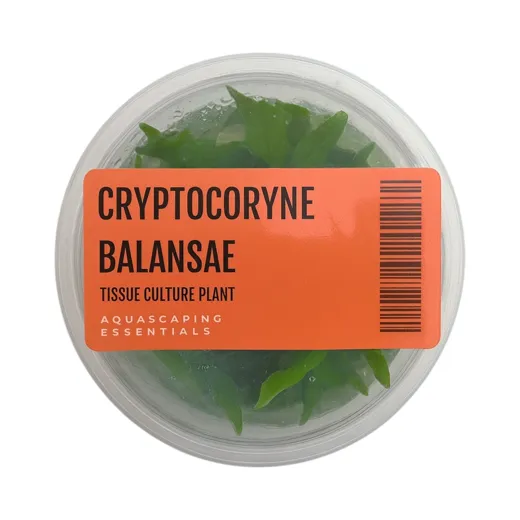
Cryptocoryne Balansae Tissue Culture – Classic Background Plant for Aquascaping
Cryptocoryne Balansae is a classic background aquarium plant known for its long, narrow, beautifully textured leaves. As it grows in, it creates a natural flowing look that works especially well in planted aquariums, jungle-style layouts, and larger aquascapes needing height and movement.
Supplied as a tissue culture, this plant arrives clean, pest-free, algae-free, and snail-free — making it a great choice for aquascapers who want healthy plants without introducing unwanted hitchhikers.
Why it belongs in your tank
- Tall, textured leaves – perfect for background planting and adding vertical movement
- Hardy Cryptocoryne species – suitable for low tech and planted community aquariums
| Specification | Detail |
|---|---|
| Plant Type | Background plant |
| Species | Cryptocoryne Balansae |
| Form | Tissue culture |
| Leaf Shape | Long, narrow, textured |
| Light Requirement | Low to moderate |
| Water Temperature | 20–28°C |
FAQ
Is Cryptocoryne Balansae suitable for beginners?
Yes, it is a hardy species that thrives in low-tech setups and is well-suited for beginners looking to establish a stable planted aquarium.
How long does it take for the plant to grow after being placed in the tank?
It typically takes 2 to 4 weeks for Cryptocoryne Balansae to show visible growth, depending on lighting, water parameters, and nutrient availability.
Can this plant be used in a community aquarium with fish?
Yes, it is compatible with community fish and works well in planted community aquariums due to its hardiness and low maintenance needs.


Jessica Coleman –
The plant arrived healthy and free of pests. It grew steadily in my 55-gallon tank with moderate lighting. The leaves developed a natural flow that enhanced the jungle-style layout. Easy to plant and maintain.
Jake Cameron –
I’ve had this plant for three months now. It’s grown well and adds a nice vertical element to the background. The tissue culture method means no algae or snails, which was a big plus.
William Nolan –
Great for creating depth in a planted tank. The texture of the leaves is unique and gives a more natural look. I used it in a community tank with danios and it hasn’t been a problem.
Thomas Slater –
It’s a reliable plant that doesn’t require much attention. I noticed it grows best in moderate lighting and with regular CO2 supplementation, though it can survive without it.