Diamond Apistogramma
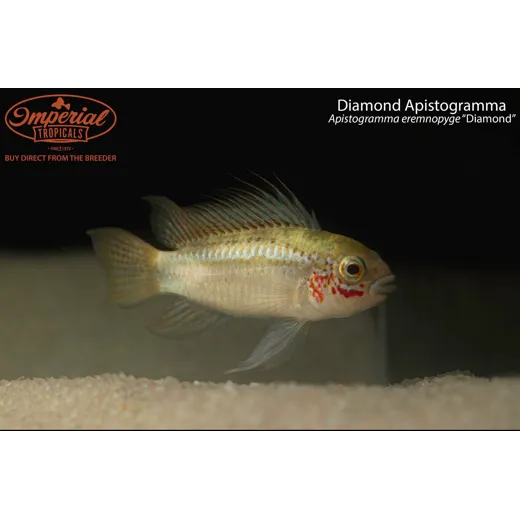
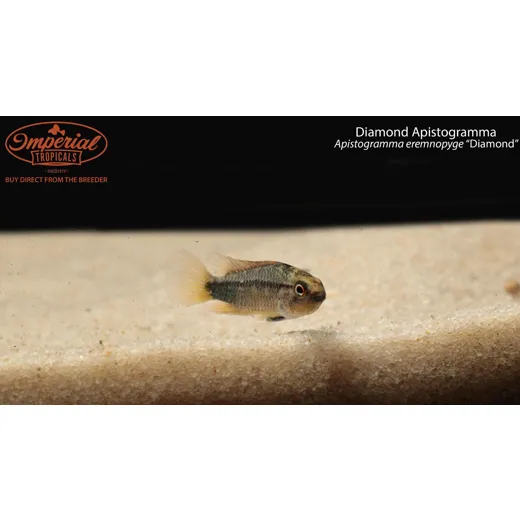
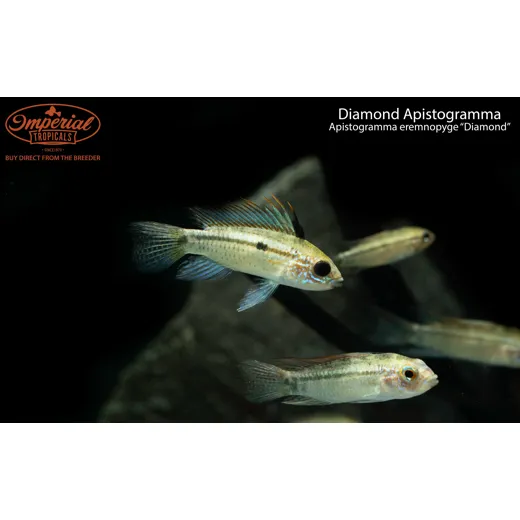
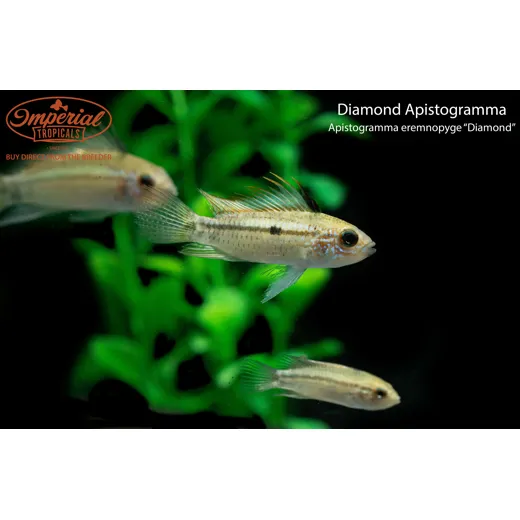
The diamond apistogramma is a small species of apisto native to tributaries flowing into the Rio Itaya in Peru. There they hide among leaf litter and other botanicals in areas of soft, acidic, tannin-stained, and calm water. Both their common and scientific name comes from the identifying, roughly diamond-shaped black spot on the base of the tail. This species can be rather cryptic especially if kept under bright lights, so they will do best if kept in dim lighting with calm tankmates that won’t frighten them. A sandy substrate is necessary due to their earth-eating habits.
When mature and in the right conditions, male diamond apistogrammas display blue spotting on a red gill plate, blue fins, and an impressively tall, mohawk-like, dorsal fin. Females show less vivid coloration and are generally more subdued.
| Key Features | Details |
|---|---|
| Origin | Tributaries of the Rio Itaya, Peru |
| Water Conditions | Soft, acidic, tannin-stained, calm water |
| Lighting | Dim lighting preferred |
| Substrate | Sandy substrate required |
| Behavior | Cryptic; prefers calm tankmates |
FAQ
What kind of lighting is best for diamond apistogrammas?
Dim lighting is recommended as they are cryptic and may become stressed under bright lights.
Do diamond apistogrammas require specific substrate?
Yes, a sandy substrate is necessary due to their earth-eating habits.
How do males and females differ in appearance?
Males display blue spotting on the gill plate, blue fins, and a tall mohawk-like dorsal fin when mature. Females are generally more subdued with less vivid coloration.



Molly Allan –
These fish are peaceful and fit well in a community tank. I kept them with other small apistogrammas and they stayed calm. The dim lighting helped them blend in and look natural. I use sand substrate and add leaf litter for hiding spots. They’ve been thriving for over six months.
Jake Russell –
The fish arrived healthy and active. I noticed the male developed blue spots on his gill plate after a few weeks. The tank needs dim lighting and soft water, which I’ve maintained. They’re shy but fascinating to watch when they’re not moving.
Ella Miller –
I followed the care instructions carefully. The sandy substrate and tannin-stained water matched their natural habitat. The fish are quiet and stay hidden most of the time. I appreciate how they don’t disturb other tank inhabitants.