Common Name
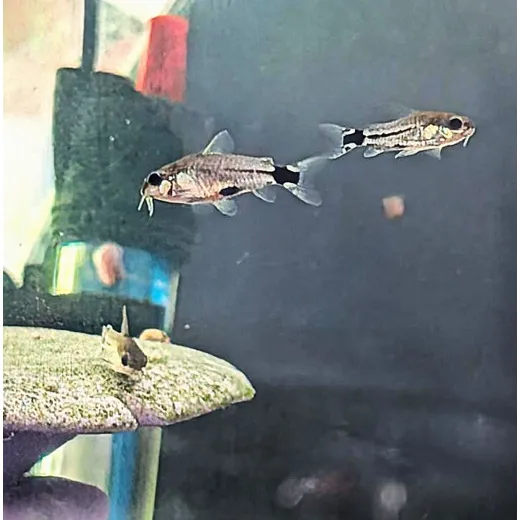
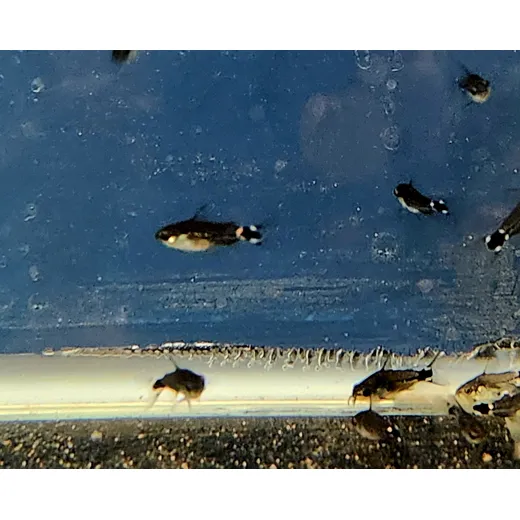
Tail-spot Pygmy Cory, Hastatus Cory
Origin and Habitat
Gastrodermus hastatus occurs in South America across parts of the Amazon and Paraguay river basins, with records from Brazil, Bolivia, Paraguay, and northeastern Argentina. In the wild it favors very shallow marginal creeks, vegetated swamps, backwaters, and floodplain ponds where fine sand or mud is covered by grasses, leaf litter, and submerged stems. Water may be clear to tea stained with gentle flow and abundant micro life among plants. Large groups often form in midwater over plant beds rather than hugging the bottom.
Temperature and Water Conditions
Preferred temperature is 22 to 26°C, which is 72 to 79°F. Wild sites are typically soft to moderately hard and near neutral.
Physical Characteristics
| Feature | Detail |
|---|---|
| Size | Up to 3.5 cm (1.4 inches) |
| Coloration | Light silver with a distinct dark spot on the tail |
| Behavior | Active, schooling fish that prefer plant-rich environments |
FAQ
What is the ideal water temperature for Diamond Tail Cory?
The ideal water temperature is between 22 and 26°C (72 to 79°F).
Where do Diamond Tail Cory naturally live?
They are native to South America, found in the Amazon and Paraguay river basins, including Brazil, Bolivia, Paraguay, and northeastern Argentina.
Do Diamond Tail Cory prefer to live in groups?
Yes, they naturally form large groups and are most active in midwater over plant beds.

Molly Robertson –
These corydoras are active and social. They thrive in a planted tank with soft water and plenty of hiding spots. The tail spot is clearly visible and they seem to enjoy swimming among the plants.
Alan Randall –
Easy to care for and very peaceful. I kept them with other small community fish. They stay active and don’t stress the tank environment.
Wanda James –
Great addition to a community tank. They are clean and help maintain the substrate. The tail spot makes them stand out and they form a nice school.