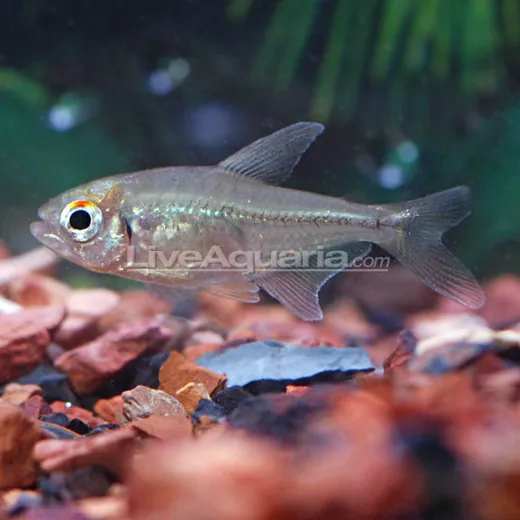
Diamond Tetra – LiveAquaria
The Diamond Tetra, also known as Brillantsalmler, Diamond Characin, Pittier’s Tetra, and Timanttitetra, is native to South American inland waters. They are said to sparkle like a diamond with their silvery scales and orange accents.
These Tetras prefer a heavily planted tank with softer, acidic water. They are ideal for community tanks and thrive when kept in groups of at least three, preferably an odd number. They enjoy schooling and add visual appeal to any aquarium setup.
Breeding Information
To breed Diamond Tetras, separate a pair into a breeding tank with no initial lighting. Gradually increase lighting to encourage spawning. Water hardness should be below 4 degrees. Live food such as mosquito larvae can help stimulate breeding. After spawning, remove the adult fish to protect the eggs and ensure fry survival.
| Water Parameters | Requirements |
|---|---|
| Water Hardness | Less than 4 degrees |
| Water pH | Acidic to soft (ideally 5.5–6.5) |
| Temperature | 72–78°F (22–26°C) |
| Plant Preference | Heavily planted tank |
FAQ
What is the ideal group size for Diamond Tetras?
Diamond Tetras prefer to school in groups of at least three, and an odd number is ideal for their natural behavior.
What water conditions do Diamond Tetras require?
They thrive in soft, acidic water with a hardness below 4 degrees and a pH between 5.5 and 6.5.
How can I encourage Diamond Tetras to breed?
Separate a pair into a breeding tank with no initial lighting, then gradually increase light exposure. Offer live food like mosquito larvae to stimulate spawning.

Wendy Welch –
The Diamond Tetras are stunning with their silvery bodies and orange accents. I kept them in a 20-gallon tank with plenty of plants and they school beautifully. They’re peaceful and don’t stress other fish. Easy to maintain with soft water and a bit of live food.
Dorothy Stewart –
They look amazing and are active in a community tank. I kept them in groups of five and they swim together in a coordinated way. The only thing is they need soft water and a well-planted environment to thrive.
Lucas Allan –
I’ve had these fish for six months and they’re still vibrant. They don’t eat much and adapt well to my tank setup. The breeding process was successful after following the lighting and food tips.