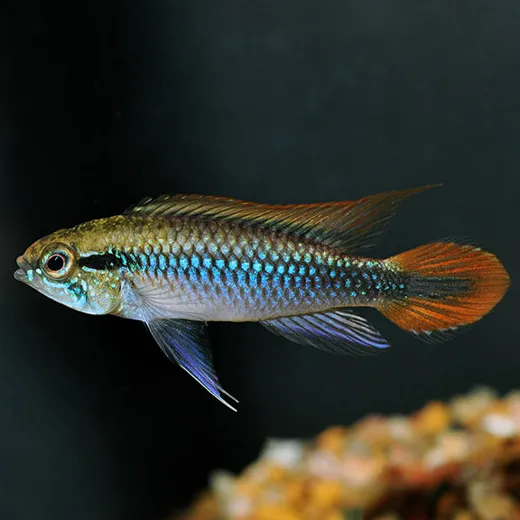
Double Full Red Agassizi Cichlid
The Apistogramma agassizi is known in the hobby as the Double Full Red Agassizi Cichlid, which originates within the Amazon Basin of South America. This variation is tank-raised and has been bred for its brilliant red coloration within the dorsal and caudal fins. The body of these fish is elongated with a dark horizontal stripe. The dorsal fin extends almost the entire length of the body and is held low on the body with red outlines. These fish will change coloration depending on its mood.
The Double Full Red Agassizi Cichlid should be kept in an aquarium that is 30 gallons minimum, with densely planted groupings. They require plenty of open swimming areas but also need hiding places. A fine gravel to sand substrate is recommended. Although a semi-aggressive fish, they are generally peaceful when properly housed.
| Specifications |
|---|
| Species: Apistogramma agassizi |
| Origin: Amazon Basin, South America |
| Minimum Tank Size: 30 gallons |
| Substrate: Fine gravel or sand |
| Water Conditions: Warm, stable, slightly acidic to neutral |
| Behavior: Semi-aggressive, social, needs hiding spots |
FAQ
What is the ideal tank size for a Double Full Red Agassizi Cichlid?
The minimum recommended tank size is 30 gallons to provide adequate space for swimming and hiding.
Do these cichlids require specific plants or decorations?
Yes, they thrive in tanks with densely planted groupings and need both open swimming areas and hiding spots such as rocks or caves.
How does the coloration of this fish change?
The fish will change coloration depending on its mood, with the red fins becoming more vibrant when active or stressed.
Neil Piper –
The red coloration is stunning and very vibrant. I kept them in a 40-gallon tank with plenty of plants and hiding spots. They are active and enjoy swimming around. The color shifts when they’re excited or calm, which is fascinating to watch.
Alexandra Ferguson –
Great fish to add to a community tank. They don’t dominate like some cichlids and are peaceful with other non-aggressive species. The red fins stand out in the tank, especially in low light.
Eric Hill –
I’ve had these for six months and they’re still active and healthy. The dark horizontal stripe on their body is very distinct. They do need a well-planted tank with open space, but it’s worth the setup.