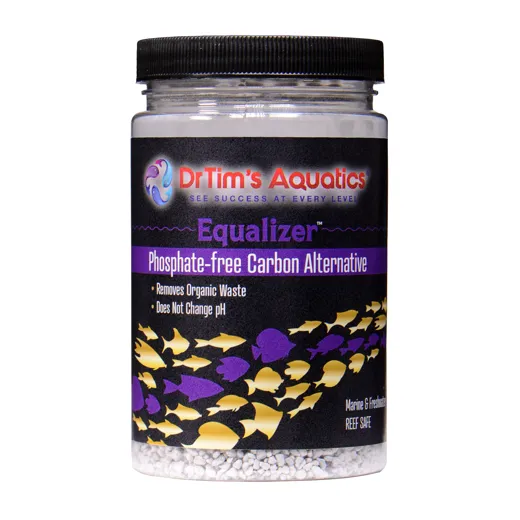
Dr. Tims Equalizer
Equalizer™ is great to use in systems where activated carbon is not recommended. Being less forceful than carbon, it is ideal for plant and reef tanks and in soft water aquaria. It removes fine particulate particles, organics, and helps control ammonia, nitrates, and phosphates.
Use 1 cup (240 ml) of Equalizer™ for every 35 gallons (132 liters) of water. Product should be rinsed first in freshwater and then poured into a filter bag. Place the filter bag in your sump, filter, or other part of the system. Use just like activated carbon. It will last about 4–6 weeks depending on tank conditions.
| Usage | 1 cup (240 ml) per 35 gallons (132 liters) |
|---|---|
| Preparation | Rinse in freshwater before use |
| Duration | 4–6 weeks depending on tank conditions |
FAQ
Can Equalizer™ be used in reef tanks?
Yes, Equalizer™ is suitable for reef tanks due to its gentle filtration properties and ability to remove organics and control nitrates and phosphates without harming sensitive marine life.
Does Equalizer™ remove ammonia?
Equalizer™ helps control ammonia levels by removing organics that contribute to ammonia buildup, but it is not a primary ammonia remover. It works best in combination with other water treatment methods.
How often should I replace the Equalizer™ filter media?
Replace the Equalizer™ every 4 to 6 weeks depending on tank conditions, such as fish population, feeding frequency, and water parameters.


Deirdre Dickens –
I’ve used Equalizer™ in my planted tank for three months now. It’s gentle on the plants and has noticeably reduced algae growth. The water clarity improved and I see less organic buildup. Easy to install and works well with my existing filter setup.
David Cornish –
Great alternative to activated carbon for my soft water tank. It doesn’t clog the filter as much and doesn’t affect water chemistry like carbon does. I’ve seen a steady drop in nitrates over time. Just make sure to rinse it first.
Benjamin Kerr –
My reef tank has been stable since I switched to Equalizer™. It doesn’t absorb beneficial trace elements like carbon does, which is a big plus. The particulate removal is effective and the tank looks cleaner.