
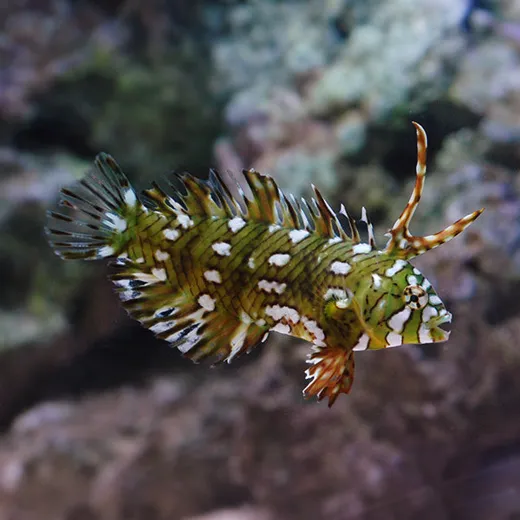
Dragon Wrasse (LiveAquaria)
The Dragon Wrasse, also known as the Rockmover Wrasse, exhibits distinct coloration changes as it matures. Juveniles display body colors ranging from maroon to green with white markings. Their fins are particularly striking, especially the first two dorsal spines that form a ‘cow-lick’ appearance.
Adult Dragon Wrasse have a light-blue to green body with bold darker markings and no large dorsal spines. This species prefers a minimum 180-gallon aquarium with a 2-4 inch sandy substrate, as it sleeps submerged in the sand.
| Key Features | Description |
|---|---|
| Size | Reaches up to 12 inches in length |
| Water Conditions | Temperature: 75–82°F, pH: 8.1–8.4 |
| Diet | Crustaceans, snails, shrimp, starfish, small invertebrates |
| Compatibility | Best kept with passive fish; avoid reef tanks; house one per tank during juvenile stage |
FAQ
What is the difference between juvenile and adult Dragon Wrasse?
Juveniles have maroon to green bodies with white markings and a distinctive ‘cow-lick’ from the first two dorsal spines. Adults develop a light-blue to green body with darker markings and lose the large dorsal spines.
Can the Dragon Wrasse be kept in a reef aquarium?
No, the Dragon Wrasse should not be placed in a reef aquarium as it feeds on invertebrates like snails, shrimp, and starfish.
What substrate is recommended for this fish?
A 2-4 inch sandy bottom is ideal, as the Dragon Wrasse sleeps submerged in the sand.

Chloe Bell –
The Dragon Wrasse has been a fascinating addition to our 200-gallon tank. It spends most of its time in the sand, which is perfect for its natural behavior. The color change from juvenile to adult is noticeable and quite beautiful. We’ve kept it alone, and it’s very calm when not feeding.
Gavin Coleman –
We were cautious about adding this fish due to its feeding habits, but it’s adapted well to our setup. It’s active during the day and enjoys exploring the sand bed. The ‘cow-lick’ fin pattern in the juvenile stage was a highlight.
Michael MacLeod –
After a few months, the fish has grown into a vibrant green with dark markings. It’s not aggressive and doesn’t disturb other fish. We’re happy with the peaceful coexistence and the visual appeal it brings to the tank.