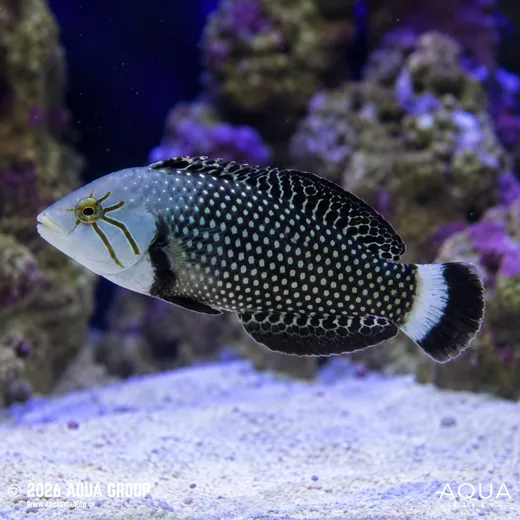
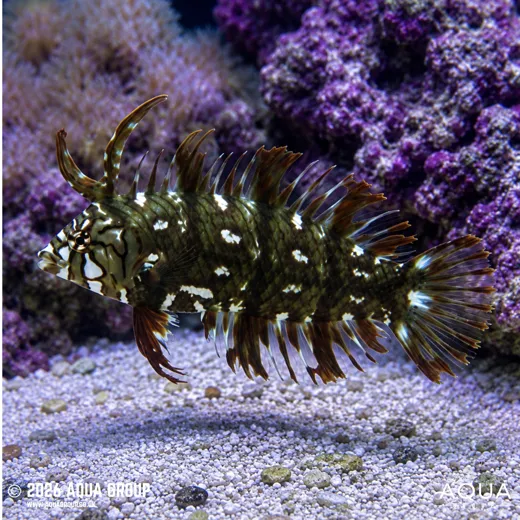
Dragon Wrasse (Novaculichthys taeniourus)
The Dragon Wrasse (Novaculichthys taeniourus) is a dramatic Indo-Pacific marine wrasse known for its remarkable transformation from juvenile to adult. Juveniles display a burgundy-brown body, irregular white markings and elongated dorsal and pelvic fin rays that resemble drifting seaweed, while mature fish develop a powerful body with contrasting dark, pale and greenish markings.
Also known as the Rockmover Wrasse or Reindeer Wrasse, this intelligent and highly active predator spends much of its day turning rubble and searching the substrate for crustaceans, molluscs and other invertebrates. Its adult size, destructive foraging behaviour and increasingly assertive temperament make it a demanding species for aquarium settings.
| Species | Novaculichthys taeniourus |
|---|---|
| Common Names | Dragon Wrasse, Rockmover Wrasse, Reindeer Wrasse |
| Habitat | Indo-Pacific coral reefs and rocky substrates |
| Behavior | Active, territorial, foraging predator |
| Adult Size | Up to 15 cm (6 inches) |
FAQ
What is the difference between juvenile and adult Dragon Wrasse?
Juveniles have a burgundy-brown body with irregular white markings and long, seaweed-like fin rays. As they mature, they develop a powerful body with contrasting dark, pale, and greenish markings.
Is the Dragon Wrasse suitable for a home aquarium?
The Dragon Wrasse is not recommended for most home aquariums due to its aggressive behavior, destructive foraging habits, and need for large, complex reef environments.
What do Dragon Wrasse feed on?
It primarily feeds on crustaceans, molluscs, and other invertebrates found in the substrate and rubble of reef environments.
Frank Vance –
Bought this for a reef tank, but after a few weeks it started damaging the sand bed and chasing smaller fish. Not suitable for a small or community tank. Only recommend for experienced saltwater aquarists with large, stable setups.
Richard Gill –
The fish looks beautiful when young, but it quickly became aggressive and destroyed coral structures. We had to relocate it to a larger tank. Not a beginner-friendly species.
Pippa Bower –
We kept it in a 120-gallon reef tank with plenty of rock and hiding spots. It’s active and interesting to watch, though it does dig through the sand regularly. Needs a lot of space and careful management.
Anthony Hamilton –
We were excited by the appearance, but it attacked our shrimp and broke several pieces of rock. It’s too strong and territorial for our tank size. Would not recommend.