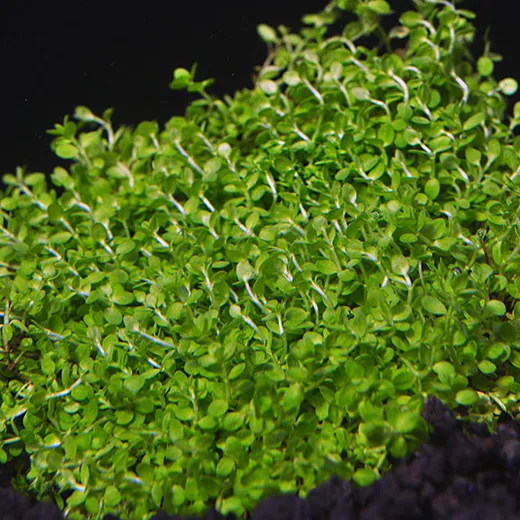
Dwarf Baby Tears Plant
The smallest known aquarium plant, Hemianthus callitrichoides, adds elegant leaf clusters to your aquarium. Ideal for the foreground, it creates a natural hiding spot for spawning fish and a feeding area for bottom dwellers.
Native to Cuba, this plant forms a dense carpet over the substrate when properly established. It thrives under bright, direct lighting and requires a rich nutrient base for optimal growth.
Regular pruning helps maintain its shape and can allow it to be floated at the water’s surface. Once conditions are met, it fills in well and provides a lush, natural look.
| Key Features | Details |
|---|---|
| Plant Species | Hemianthus callitrichoides |
| Origin | Cuba |
| Light Requirement | Bright, direct lighting |
| Water Condition | Rich nutrient base |
| Growth Habit | Foreground carpet or floating |
FAQ
Can Dwarf Baby Tears be floated on the surface?
Yes, with regular pruning, Dwarf Baby Tears can be floated at the water’s surface.
How long does it take for the plant to establish itself?
Some plants take time to establish. Once ideal lighting and nutrient conditions are met, it will begin to fill in and form a dense carpet.
What are the ideal lighting and nutrient conditions?
Bright, direct lighting and a rich nutrient base are required for optimal health and growth.
Donna Marshall –
I planted Dwarf Baby Tears in my 10-gallon tank and after a few weeks, they started forming a nice green carpet. The lighting was strong and I used a nutrient-rich substrate. The fish love hiding among them, especially the neon tetras. Easy to maintain with just regular trimming.
Victor Clark –
The plant arrived quickly and looks exactly as described. I kept it in the foreground and pruned it every two weeks. It grows slowly at first but became dense after a month. Great for spawning fish to hide eggs.
Evan Walker –
I was skeptical about such a small plant, but it has become a staple in my tank. It stays vibrant under bright LED lights and doesn’t require much maintenance. I’ve floated a few leaves and they do well on the surface.