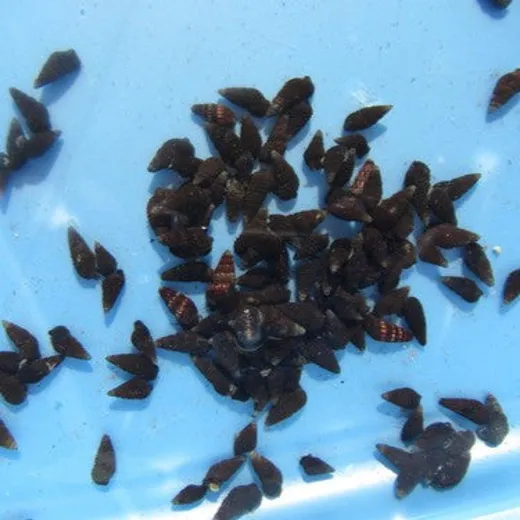
Dwarf Cerith Snail 10 Pack
The Dwarf Cerith Snail (Cerithiidae sp.) is a small but effective algae eater, measuring approximately half an inch in size. These snails are ideal for small aquariums where other cleaners cannot reach. They consume various types of algae, cyanobacteria, detritus, and diatoms, helping maintain a clean environment.
For optimal performance, it is recommended to have at least four snails per gallon of water. Dwarf Ceriths are nocturnal and highly hardy, though they are sensitive to rapid changes in salinity and pH during acclimation.
A tank lid is strongly advised as these snails can crawl out of the aquarium. Acclimate the snails slowly using a drip method to avoid stress.
| Specifications |
|---|
| Species: Cerithiidae sp. |
| Size: Approximately 0.5 inch |
| Quantity: 10 snails |
| Recommended Density: 4 per gallon |
| Feeding: Algae, cyanobacteria, detritus, diatoms |
| Activity Pattern: Nocturnal |
FAQ
How many Dwarf Cerith Snails should I keep per gallon?
It is recommended to have at least four Dwarf Cerith Snails per gallon for effective algae control.
Can these snails survive in tanks without a lid?
No, these snails can crawl out of the tank and may escape if the tank is not covered with a lid.
Are they sensitive to water changes?
Yes, they are sensitive to rapid changes in salinity and pH. Slow acclimation via drip method is recommended.
Owen Johnston –
I bought 10 Dwarf Cerith Snails for my 10-gallon tank. They’ve been active since day one and are eating algae on the glass and substrate. I keep the tank covered, and they haven’t escaped. They seem to be thriving and are a great addition to my tank.
Molly Piper –
The snails arrived quickly and are small but effective. I noticed a reduction in green algae after a week. I have a lid on the tank now, which I wish I had before. They’re hardy and don’t seem to stress easily.
Jan Turner –
I’ve had a few snail species before, but these are the most efficient at cleaning diatoms and detritus. I now have four per gallon and they’re active at night. No issues with acclimation after following the drip method.