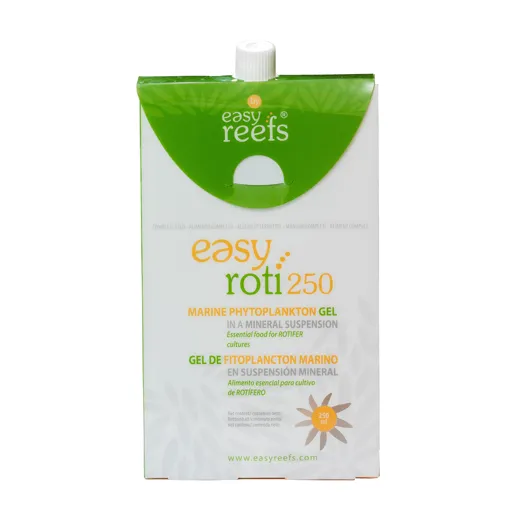
Easy Reefs Easyroti 250
For rotifer culture, two Easy Reefs® microalgae species are used: Nannochloropsis (80%) + Tetraselmis (20%).
The dosage depends on the number of rotifers reached. The average consumption is 4 ml of Easyroti per litre of rotifer culture per day (25% of rotifers will be harvested daily).
Material Needed
- 3 cylinder flasks of 2 L with slow bubbling
- Rotifer inoculums
Food Required
Easy Reefs® Nannochloropsis (80%) + Tetraselmis (20%)
Culture Cycle from Strain
5 days
Recommended Sea Water Density
1019, although they can be cultured well up to 1022.
| Parameter | Value |
|---|---|
| Algae Composition | Nannochloropsis (80%) + Tetraselmis (20%) |
| Recommended Density | 1019 (up to 1022) |
| Consumption Rate | 4 ml per litre per day |
| Culture Cycle | 5 days |
FAQ
What is the recommended sea water density for culturing rotifers with Easyroti 250?
The recommended sea water density is 1019, although the culture can be maintained up to 1022.
How much Easyroti should be used per litre of rotifer culture per day?
The average consumption is 4 ml of Easyroti per litre of rotifer culture per day.
How long does it take to complete a rotifer culture cycle from strain?
The culture cycle from strain takes 5 days.

Megan Abraham –
Easyroti 250 is very effective for maintaining a steady rotifer population. The algae mix is balanced and easy to mix into the culture. I’ve been using it for two weeks and the rotifer numbers are consistent every day. The instructions are clear and the culture setup is simple.
Nicholas Thomson –
Works well with my existing setup. The 80/20 mix of Nannochloropsis and Tetraselmis supports good growth. I noticed a slight drop in density after 4 days, but it recovered quickly with daily feeding. The recommended density range is accurate and easy to follow.
Chloe Bailey –
Highly satisfied with the performance. The rotifers grow steadily and the culture remains stable even in fluctuating water conditions. The 5-day cycle is reliable and the dosage is easy to measure. No issues with algae clumping or decay.