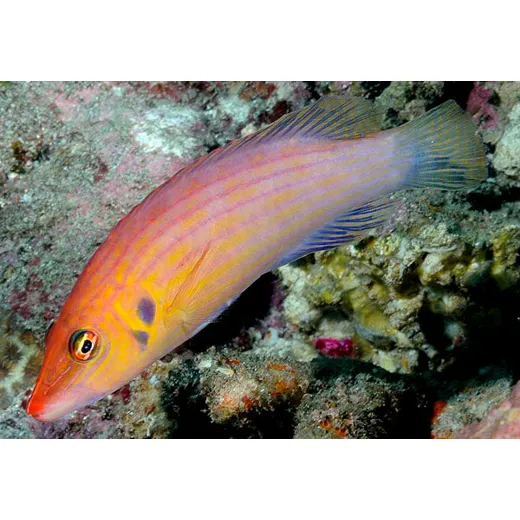
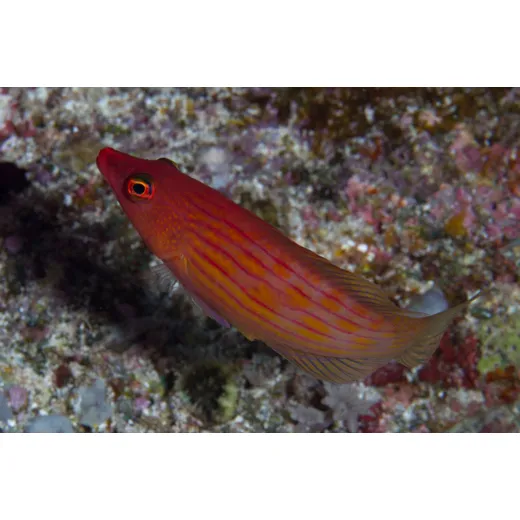
Eightline Wrasse – Size: S (1″ to 1.5″)
The Eightline Wrasse (Pseudocheilinus octotaenia) is a vibrant and active marine fish commonly found in tropical reef environments. This species is well-suited for experienced saltwater aquariums due to its active behavior and need for a well-maintained habitat.
Key Features
- Size: 1″ to 1.5″ (2.5 to 3.8 cm) when mature
- Coloration: Bright blue and yellow stripes with a distinctive eight-line pattern
- Behavior: Active, curious, and social; may display territorial tendencies
- Water Conditions: Requires stable temperature (75–82°F), salinity (1.020–1.025), and pH (8.1–8.4)
| Parameter | Value |
|---|---|
| Species | Pseudocheilinus octotaenia |
| Size Range | 1″ to 1.5″ |
| Hardiness | Moderate to high |
| Compatibility | Best with other peaceful, non-aggressive reef fish |
FAQ
What is the typical lifespan of an Eightline Wrasse in a home aquarium?
Please contact customer service
Is the Eightline Wrasse compatible with corals in a reef tank?
Yes, it is generally compatible with most reef corals when provided with adequate space and stable conditions. However, it may nip at soft corals or polyps, so caution is advised.
How often should water parameters be tested for this species?
Water parameters should be tested weekly to ensure stability, especially in a new setup. Regular monitoring of salinity, temperature, and pH is recommended.
Bella Watson –
The Eightline Wrasse arrived healthy and active. It has been in my 55-gallon reef tank for three months and remains vibrant. I appreciate the clear labeling and accurate size description. Only issue is it occasionally nips at a soft coral, so I’ve moved it to a safer area.
Fiona Quinn –
Great fish for a saltwater enthusiast. It’s colorful and active, which adds energy to the tank. I noticed it’s more territorial than expected, so I made sure to keep it with larger, calm fish. Overall, a satisfying addition to my aquarium.
Olivia Hughes –
The fish looks good and seems to adjust well to the tank. However, it’s not very social and tends to hide during the day. I expected more interaction, but it’s still a decent choice for a reef setup.