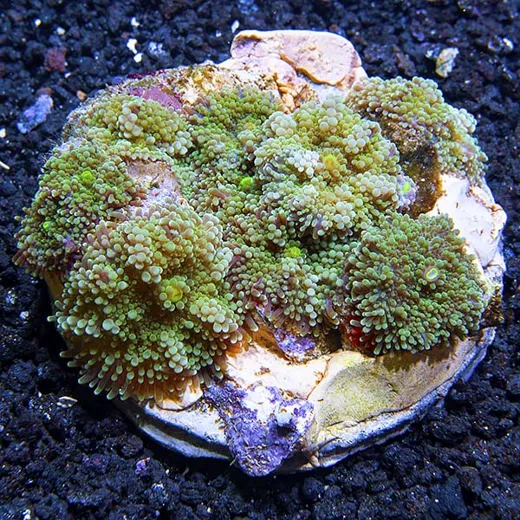
Emerald Green Ricordea Mushroom Coral
The Emerald Green Ricordea Mushroom Coral belongs to the order Corallimorpharia (Stephenson, 1937) and features short, club-like, or berry-shaped tentacles. It resembles stony corals and is also known as a Disc Anemone. This coral is available in various color forms, with green being the most common.
It thrives under medium to high light conditions, though metal halide lighting may be too intense. The coral prefers low water movement and is not as hardy as some other mushroom coral species. It is classified as semi-aggressive and requires sufficient space when placed near other corals. It reproduces through longitudinal fission.
The symbiotic algae, zooxanthellae, living within the coral provide most of its nutritional needs via photosynthesis driven by light.
| Key Features | Details |
|---|---|
| Color | Emerald green |
| Light Level | Medium to high |
| Water Movement | Low |
| Reproduction Method | Longitudinal fission |
| Compatibility | Semi-aggressive; requires spacing from other corals |
FAQ
What light level does the Emerald Green Ricordea Mushroom Coral require?
It requires medium to high light levels, though metal halide lighting may be too bright and should be avoided.
Is this coral suitable for a reef tank with other corals?
It is semi-aggressive and requires adequate space between itself and other corals to prevent competition or physical damage.
How does the coral obtain its nutrients?
The coral hosts symbiotic algae called zooxanthellae, which perform photosynthesis and provide most of its nutritional needs through light exposure.

Thomas Mills –
The emerald green color is vibrant and stands out in my tank. I’ve kept it for six months with medium lighting and low water flow. It grows slowly but steadily and hasn’t caused any issues with nearby corals when spaced properly.
Keith Mackenzie –
It’s a nice addition to my reef setup. I adjusted the lighting to LED with moderate intensity and kept water movement low. It’s not aggressive, but I make sure to place it away from other corals to avoid contact.
Olivia Thomson –
The coral looks healthy after a few weeks. I noticed it doesn’t grow fast and needs consistent light. I’m cautious about placing it too close to other species to avoid stress or damage.