Common Name
Empire Gudgeon
Hypseleotris compressa
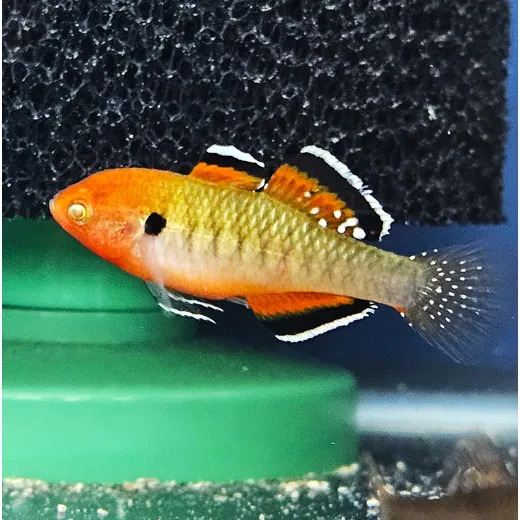
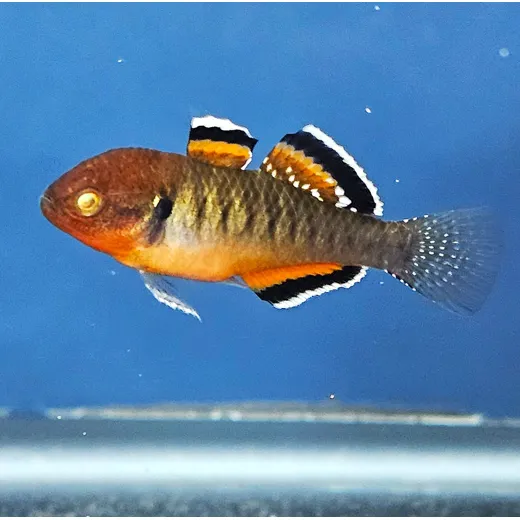
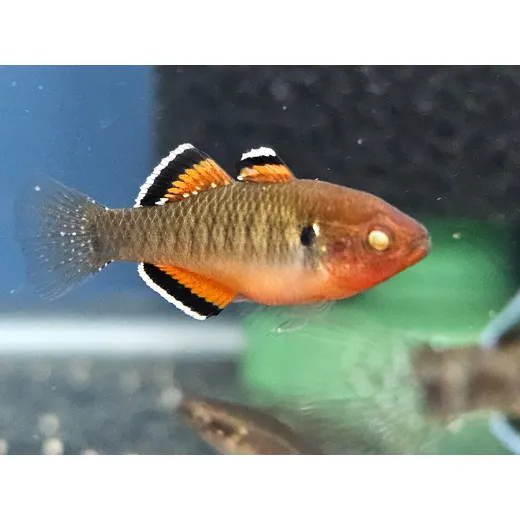
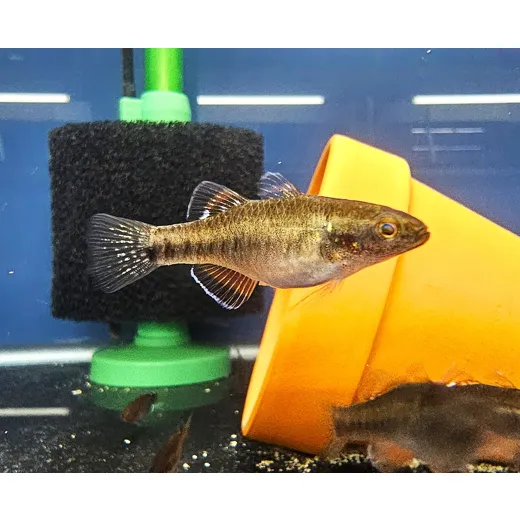
A brilliantly colored Australian gudgeon. Non-breeding fish are olive to golden with neat fin markings. Breeding males glow with red-orange on the head and lower sides with crisp blacks and whites in the fins — a transformation that has to be seen to be believed.
Origin and Habitat
Native to coastal drainages of northern and eastern Australia from Western Australia across the Top End to eastern Victoria, with populations also in southern central Papua New Guinea and West Papua. Adults favor lower river reaches, backwaters, floodplain lagoons, and upper estuaries among aquatic vegetation and submerged wood. Juveniles often use faster riffles and brackish margins. The species tolerates fresh to brackish water.
Physical Characteristics
| Feature | Description |
|---|---|
| Body Shape | Streamlined with a compressed body |
| Coloration | Olive to golden in non-breeding; red-orange head and lower sides in breeding males with black and white fin patterns |
| Fin Markings | Crisp black and white patterns in breeding males |
FAQ
What is the typical water temperature range for Empire Gudgeon?
Please contact customer service
How long does it take for an Empire Gudgeon to reach breeding condition?
Please contact customer service
Is Empire Gudgeon suitable for community tanks?
Yes, Empire Gudgeon is generally peaceful and suitable for community tanks with compatible species.

Ryan Slater –
The Empire Gudgeon is a stunning addition to my aquarium. The color change during breeding season is incredible. It’s active and doesn’t stress other fish. Easy to care for and adapts well to a planted tank with soft substrate.
Stewart Sutherland –
Beautiful fish with vibrant colors. I noticed the males change color when they’re active. They enjoy the plants and stay near the back of the tank. A bit shy at first but settles in quickly.
Brian North –
Great choice for a visually appealing species. The red-orange glow during breeding is hard to miss. I keep them in a 55-gallon tank with driftwood and live plants. They thrive in slightly brackish conditions.