Flame Angelfish
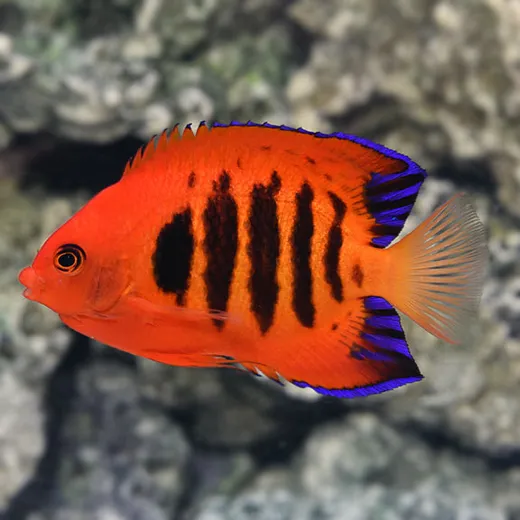
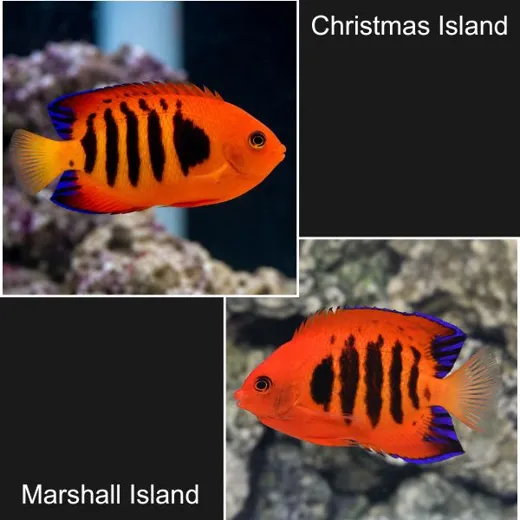
The Flame Angelfish is a flashy addition to many aquariums. One of the most popular of the dwarf angelfish, the Flame Angelfish is a bold red/orange color with vertical black stripes highlighting the body and horizontal black stripes along the caudal portions of the blue-tipped dorsal and anal fins.
The Flame Angelfish requires at least a 70-gallon aquarium with lots of hiding places and live rock for grazing. The Flame Angelfish is prone to nip at stony and soft corals, sessile invertebrates, and clam mantles. If the Flame Angelfish is to be added to a peaceful community, it should be the last fish introduced. The Flame Angelfish adapts well to aquarium life, but should be kept in an established system and housed with dissimilar genera.
| Specifications |
|---|
| Species: Flame Angelfish |
| Minimum Tank Size: 70 gallons |
| Water Temperature: 75-82°F |
| Water pH: 8.1-8.4 |
| Compatibility: Best with non-aggressive, dissimilar species |
| Feeding: Omnivorous, prefers live or frozen foods |
FAQ
What is the ideal tank size for a Flame Angelfish?
The Flame Angelfish requires at least a 70-gallon aquarium to thrive.
Does the Flame Angelfish harm other marine life?
Yes, the Flame Angelfish is prone to nipping at stony and soft corals, sessile invertebrates, and clam mantles.
How should I introduce a Flame Angelfish to my tank?
It should be the last fish introduced to a community tank to minimize aggression and stress on other inhabitants.

Sonia Newman –
The Flame Angelfish is a stunning addition to my 75-gallon tank. Its vibrant red and black patterns are eye-catching. I made sure to add plenty of live rock and hiding spots. It’s active but not overly aggressive, and it’s been eating well on a mix of frozen and live foods. I only added it after the other fish were established, which helped avoid any nipping issues.
Jacob Ross –
Beautiful fish with a bold coloration. I kept it in a 70-gallon tank with a few peaceful species. It’s not the most social fish, but it does well in a mature system. I noticed it occasionally nibbles on soft corals, so I’ve rearranged the tank layout to reduce exposure.
Julian Gibson –
The fish looks great and is active in the tank. However, it did show some interest in the soft corals I had. I had to remove a few pieces to prevent damage. I recommend adding it only after the tank is fully cycled and with plenty of hiding places.