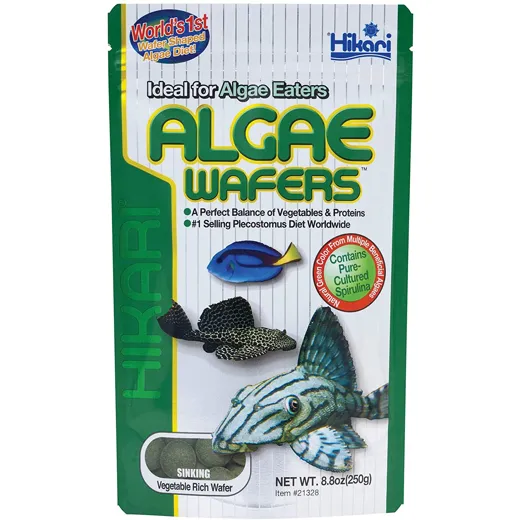
Hikari Algae Wafers
Ideal for Algae Eaters
A Scientific Diet For Plecostomus And Other Algae Eating Fishes, Including Marine Herbivores.
FEATURES
- A perfect balance of premium-select ingredients developed to promote proper growth and desirable form in most herbivorous species.
- Contains higher levels of vegetable matter and multiple algaes that plecostomus and other algae eaters prefer.
- The uniquely shaped disc sinks rapidly and retains its shape allowing less aggressive species ready access to its nutrition over longer period of time.
- The perfect treat for your omnivorous fish to super-charge their nutrient intake.
- Contains pure-cultured spirulina and chlorella algae to help your underwater friends look their best, always.
| Specification | Form: Disc-shaped wafers |
|---|---|
| Target Species | Plecostomus, other algae-eating fish, marine herbivores |
| Key Ingredients | Vegetable matter, spirulina, chlorella, algae |
| Usage | Feed daily or as needed for algae-eating fish |
FAQ
What types of fish are best suited for Hikari Algae Wafers?
Plecostomus and other algae-eating fish, including marine herbivores, benefit most from these wafers due to their high vegetable matter and algae content.
How should I feed Hikari Algae Wafers to my fish?
Feed daily or as needed. The wafers sink quickly and remain intact, allowing fish to access nutrients over time.
Are there any special storage requirements for these wafers?
Please contact customer service

Jasmine May –
My pleco has been eating these wafers regularly for two months now. The fish seems healthier with better color and active behavior. The wafers sink well and stay in place, making feeding easy and consistent.
Jason Alsop –
I tried several algae-based foods before finding these. The spirulina and chlorella content is noticeable in my fish’s appearance. It’s a good daily supplement for my community tank.
Lillian Black –
The wafers are easy to distribute and don’t float. My fish enjoy them and seem to eat more consistently. A reliable option for algae-eating species.