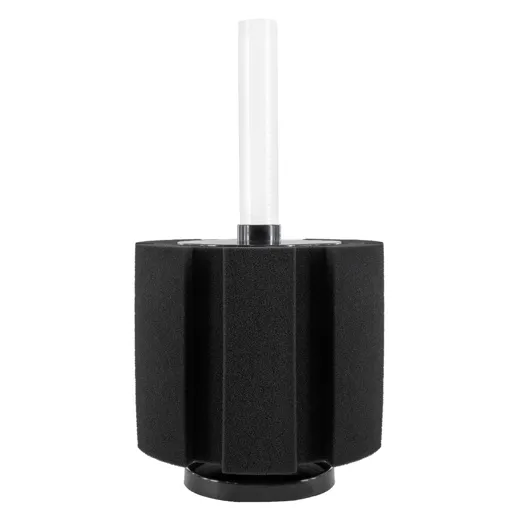
Hikari Bacto-Surge Sponge Filter Kit – X-Large
The Hikari Bacto-Surge Sponge Filter Kit provides unmatched biological and mechanical filtration and is well suited for delicate fry tanks, breeding tanks, quarantine applications, nano betta tanks as well as for sensitive, slow-moving fish such as colourful & exotic discus. The high-quality, porous sponge offers a sizable surface area with thousands of microscopic pores that encourage the growth and colonization of beneficial aerobic bacteria.
Versatile and reliable, the unit can be used as a polishing filter for canister filter applications, in combination with hang-on filters or be used as uplift tubes on under gravel filters. The durable sponge filter is composed of long-lasting polyether foam with an uplift tube and air diffuser comb.
| Specification | Detail |
|---|---|
| Filter Type | Sponge Filter |
| Size | X-Large |
| Material | Polyether Foam |
| Includes | Uplift Tube, Air Diffuser Comb |
FAQ
Can this filter be used in a breeding tank?
Yes, the Hikari Bacto-Surge Sponge Filter Kit is well suited for breeding tanks due to its gentle filtration and support for beneficial bacteria.
Is the sponge compatible with under gravel filters?
Yes, the uplift tube allows the filter to be used as an uplift tube on under gravel filters.
What type of fish is best suited for this filter?
Sensitive fish such as discus, bettas, and fry are best suited due to the filter’s gentle flow and high bacterial surface area.

Warren Clark –
Used this in my nano betta tank and it’s made a big difference in water clarity. The sponge stays clean and the fish seem more active. Great for small tanks with delicate fish.
Evan Carr –
Perfect for quarantine. The filter works quietly and doesn’t stir up the water much. My discus fish have stayed healthy after a few weeks of use.
Alexander Burgess –
Works well as a polishing filter with my canister. The airflow is steady and the sponge maintains its shape even after several weeks of use.
Diane Hudson –
Installed it in a breeding tank and noticed better water quality. The bacteria colonies seem to grow well, and fry are thriving.