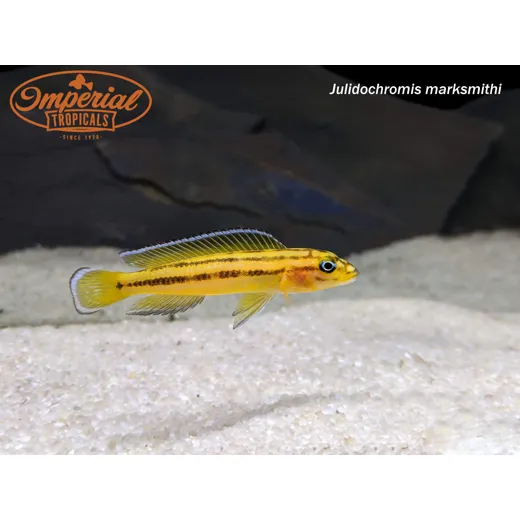
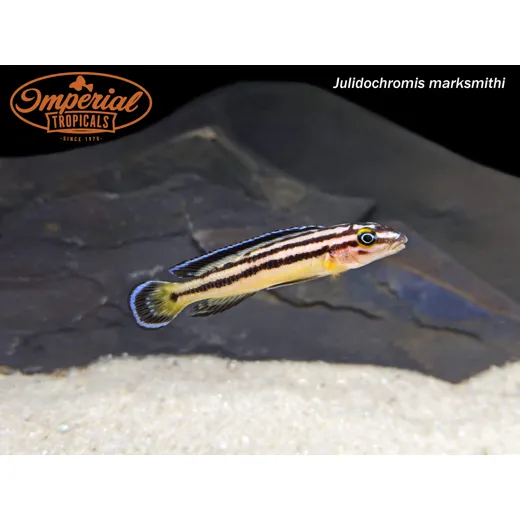
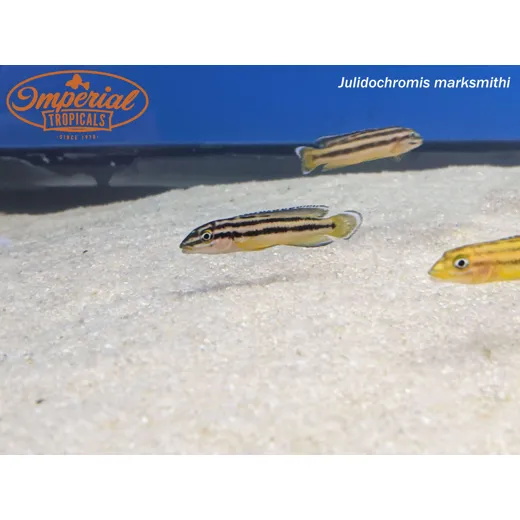
Julidochromis marksmithi
Julidochromis marksmithi was formerly known and exported as Julidochromis regani “Kipili”, J. ornatus “Kipili”, or simply J. sp. “Kipili”. In 2014, scientists formally described it as a distinct species, making it the newest member of the Julidochromis genus and the first to be described since 1975.
These fish have a yellow torpedo-shaped body with several horizontal black bars and a blue fringe on the unpaired fins. They are naturally found in rocky areas of Lake Tanganyika and are often seen hovering upside-down beneath rocky outcroppings.
Julidochromis marksmithi are excellent for breeders interested in Tanganyikan cichlids. They are cave spawners and typically produce a large number of fry, which they raise for several weeks. Sexing is nearly impossible in the early stages, but males can be identified by slightly larger size and more vibrant coloration as they mature.
| Species | Julidochromis marksmithi |
|---|---|
| Origin | Lake Tanganyika |
| Size (adult) | Up to 8 cm |
| Behavior | Cave spawner, territorial, active |
| Water Conditions | Hard, alkaline water, pH 7.8–8.6, temperature 22–26°C |
FAQ
What is the difference between Julidochromis marksmithi and the previously known Kipili species?
Julidochromis marksmithi was formally described in 2014 as a distinct species from the previously grouped ‘Kipili’ forms, including Julidochromis regani and J. ornatus. It now has its own scientific classification and is recognized as the newest species in the Julidochromis genus.
How do Julidochromis marksmithi breed?
Julidochromis marksmithi are cave spawners. They lay eggs in crevices or caves and both parents care for the fry, raising them for several weeks until they become free-swimming.
Can I sex Julidochromis marksmithi in the early stages?
Sexing Julidochromis marksmithi is nearly impossible in early life. Males can be identified by larger size and more vibrant coloration as they mature.
Steven Nash –
Received my Julidochromis marksmithi in good condition. They were active and showed vibrant colors after a week in the tank. The fish are curious and enjoy exploring rocky areas. I’ve started breeding them and they produced a healthy batch of fry. Great for beginners interested in Tanganyikan cichlids.
Jacob Clarkson –
The fish arrived healthy and stayed active in my 120-liter tank. They seem to prefer rocky structures and spend time hovering near crevices. I’m still learning about their breeding habits, but they appear to be quite hardy and easy to maintain.
Anna Clark –
First time keeping Tanganyikan cichlids. Julidochromis marksmithi are a delight to watch. Their unique color pattern and upside-down behavior are fascinating. I’ve successfully raised fry from one pair and plan to expand the population.