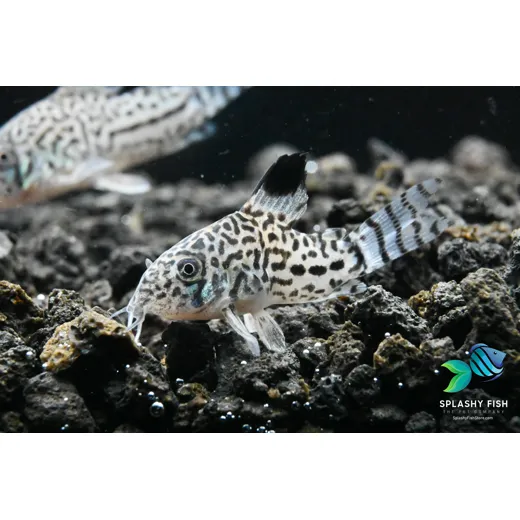
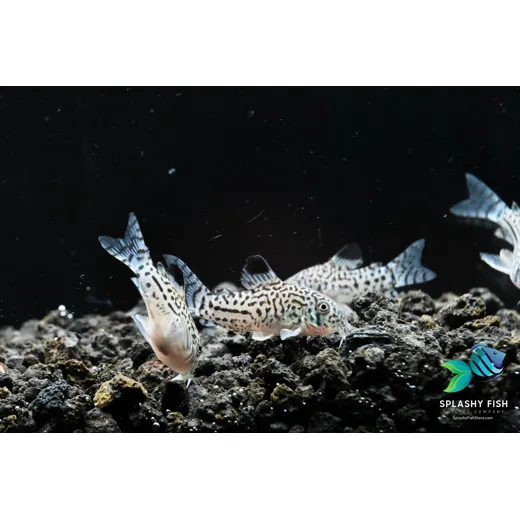
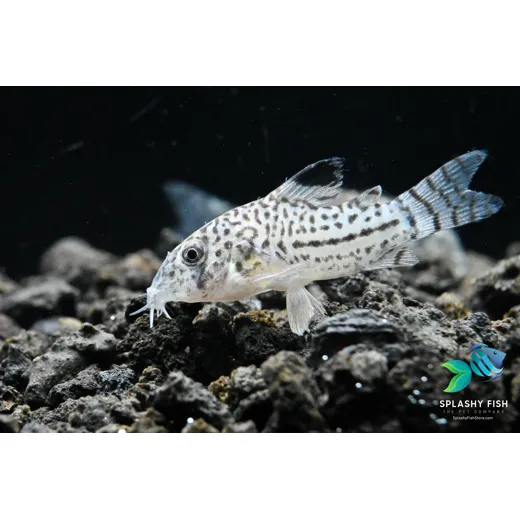
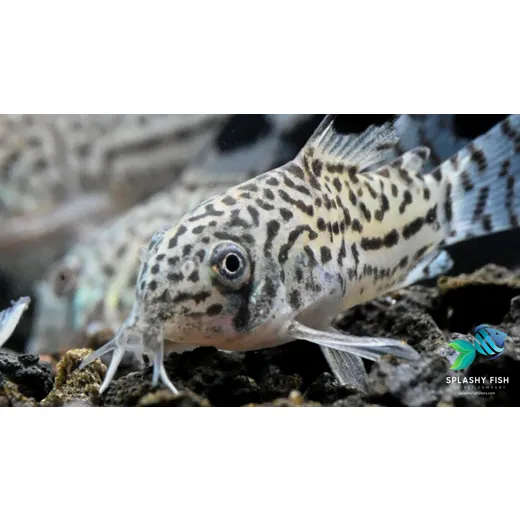
Julii Corydoras Fish (Corydoras Julii)
Julii corys, also known as Leopard Corydoras, are cute bottom dwellers that will clean your tank with the sensitive barbels they use to root around for food at night. But any fish attempting to swallow this diminutive catfish will be in for a painful surprise of spikes and armor. This fish has the ability to rotate the eye, which gives it the appearance of winking. Fishkeepers often find this fish quite entertaining and endearing.
Indigenous to the lower Amazon region, primarily the Parnaíba River of Brazil, Corydoras julii is found in flooded forest regions as well as in creeks and small tributaries. It is often confused with Corydoras trilineatus, a species that is found in the upper Amazon.
| Specifications |
|---|
| Species: Corydoras julii |
| Size: 2.5 inches (6.4 cm) |
| Temperament: Peaceful |
| Habitat: Freshwater, tropical |
| Water Temperature: 72-82°F (22-28°C) |
| Water pH: 6.0-7.0 |
FAQ
What is the typical size of a Julii Corydoras fish?
The typical size of a Julii Corydoras fish is 2.5 inches (6.4 cm).
Where is the Julii Corydoras originally from?
Julii Corydoras is indigenous to the lower Amazon region, primarily the Parnaíba River of Brazil, and is found in flooded forest regions as well as creeks and small tributaries.
How does the Julii Corydoras behave in a tank?
Julii Corydoras are peaceful bottom-dwelling fish that use their sensitive barbels to search for food at night. They are known for their entertaining behavior, including the ability to rotate their eyes to appear as if they are winking.

Angela Churchill –
I’ve had my Julii Corydoras for three months now and they’re very active at night. The fish are clean and peaceful, and their winking behavior is adorable. They don’t bother other fish and stay near the bottom where they forage for food.
Sean Ball –
The fish are easy to care for and fit well in a community tank. I noticed they’re very curious and often explore the substrate. They don’t eat much but seem to be happy with regular feeding.
Tracey Dowd –
This species is a great addition to a freshwater aquarium. The way they move and their unique eye behavior makes them stand out. I love watching them at night as they search for food with their barbels.