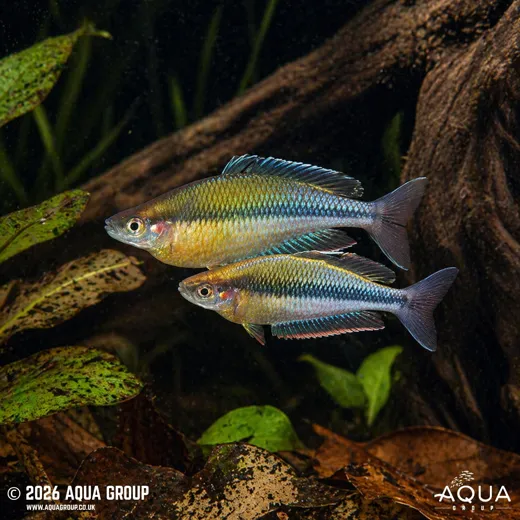
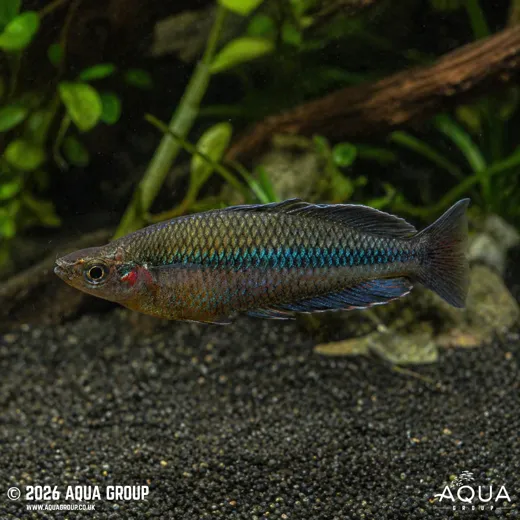
Kali Jakora Rainbowfish
A recently described rainbowfish from West Papua, blue-bodied with warm orange fin edging. Still uncommon in the hobby.
Feeding
Flake, micro-pellets and frozen daphnia, bloodworm and brine shrimp. Feeds mainly in the upper half of the tank and takes food readily.
Compatibility
Peaceful but fast and active. Keep in groups of six or more with a mix of sexes. Best with other rainbowfish, larger tetras and barbs rather than slow or long-finned species.
Behaviour and personality
Powerful, constantly moving swimmers. Males display hard to one another and to females, flaring fins and flashing a bright stripe across the forehead.
Before you buy
Juveniles in shop tanks look washed out; the adult colour takes six to twelve months to arrive. Needs optimal water conditions and a well-planted tank with plenty of open space.
| Specs | Details |
|---|---|
| Origin | West Papua |
| Body Color | Blue with warm orange fin edging |
| Adult Color Development | 6 to 12 months |
| Group Size | 6 or more (mixed sexes) |
| Activity Level | High |
FAQ
How long does it take for Kali Jakora rainbowfish to develop their full adult color?
It takes six to twelve months for juvenile Kali Jakora rainbowfish to develop their full adult color.
What kind of tank setup is best for Kali Jakora rainbowfish?
A well-planted tank with plenty of open space and optimal water conditions is recommended.
Are Kali Jakora rainbowfish suitable for beginners?
They are best suited for experienced aquarists due to their active nature and need for specific tank conditions.
Emma Kelly –
The fish arrived healthy and active. After three months, the blue body started showing orange fin edges. I keep them in a 55-gallon tank with other rainbowfish and tetras. They swim constantly and display interesting behaviors, especially during feeding.
Phil Black –
First time keeping rainbowfish. The juveniles looked pale at first, but after six months they turned vibrant. The males flash their forehead stripe when they’re active. Needs a good filter and plenty of space.
Theresa Morgan –
Great addition to my community tank. The fish are very active and the color change is impressive. I keep them in groups of six with mixed genders. They don’t stress other fish and enjoy the surface feeding.