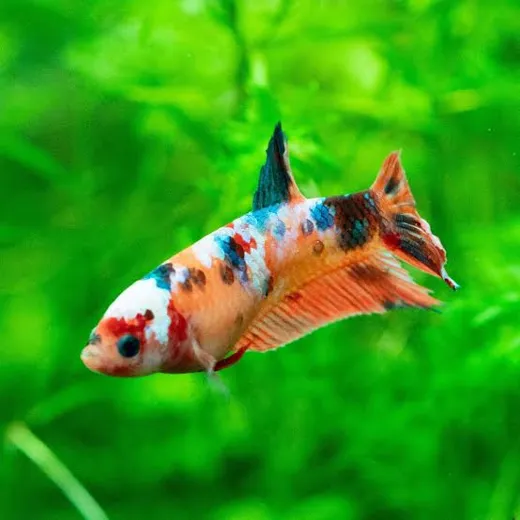
Koi Female Betta (LB)
The Koi Female Betta is a locally bred Betta featuring the distinctive marbled colour and pattern variation that makes Koi Bettas so popular. Each fish is unique, with individual combinations of red, orange, white, black, blue, or metallic tones that can continue to develop as the fish matures.
Female Bettas are active, curious fish with plenty of personality and generally shorter finnage than males. They thrive in warm, gently filtered aquariums with plants, resting areas, and easy access to the surface. Their compact size and bold appearance make them an excellent centrepiece fish for smaller planted aquariums.
Need to Know:
| Recommended For: | Beginners |
|---|---|
| Water Temperature: | 76-82°F |
| Adult Size: | 1.5 inches |
| Acclimation: | Gradual water change over 15-30 minutes |
FAQ
What makes Koi Female Bettas different from other Betta varieties?
Koi Female Bettas have unique marbled color patterns with combinations of red, orange, white, black, blue, or metallic tones that vary between individuals and can develop over time.
Are female Bettas more peaceful than male Bettas?
Yes, female Bettas are generally more peaceful and less aggressive than males, making them suitable for community tanks with compatible species.
How long does it take for a Koi Female Betta to reach full color development?
Coloration typically develops gradually over several months, with the most vibrant patterns appearing as the fish matures.


Elizabeth Harris –
The Koi Female Betta is a striking addition to my 5-gallon planted tank. Its marbled pattern is unique and changes slightly over time. It’s active and curious, and it enjoys the surface area. Easy to care for and fits well with my live plants.
Joshua Reid –
I bought this as a beginner-friendly fish and it’s been thriving. The color pattern is beautiful and the fish seems calm and content. I appreciate the compact size and how it doesn’t stress other tank mates.
Gordon Oliver –
This fish has become the centerpiece of my aquarium. The way the colors develop over time is fascinating. It’s active but not aggressive, and it enjoys the surface where it can rest.