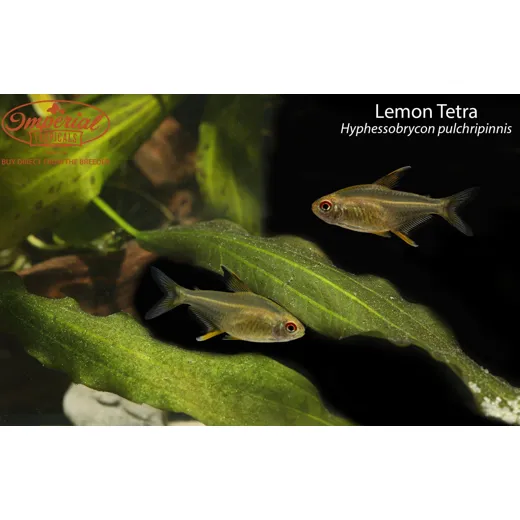
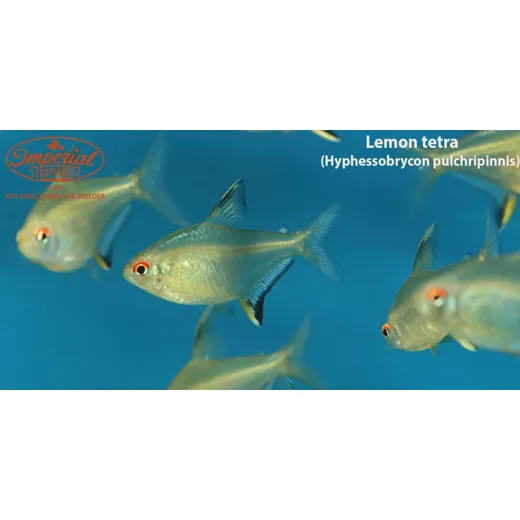
Lemon Tetra
Scientific Name: Hyphessobrycon pulchripinnis
Common Name: Lemon Tetra
Max Size: 1.5″
pH: 5.0-8.0
Hardness: Soft
Temperature: 70-82°
Aggressiveness: Peaceful
Region of Origin: South America
Captive Bred or Wild: Captive Bred
Diet: Omnivorous, accepts flake, frozen, and live foods
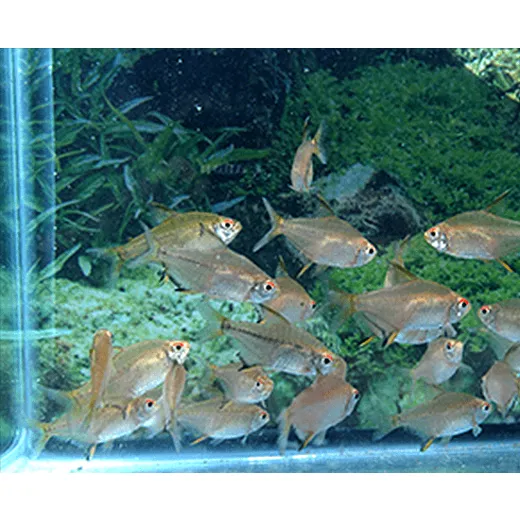
Lemon Tetras develop bright yellow bodies with red eyes as they age and settle into their tank. When young or stressed, they may appear white or gray. To encourage vibrant coloring, keep them in groups of 6 or more.
| Key Features |
|---|
| Color Development: Bright yellow with red eyes when mature |
| Group Size Recommendation: 6 or more for best color expression |
| Compatibility: Peaceful, suitable for community tanks |
| Origin: South America |
| Breeding: Captive bred |
FAQ
How long does it take for Lemon Tetras to develop their full color?
It can take several weeks to months for Lemon Tetras to develop their full bright yellow color and red eyes, especially if they are kept in a stable environment and group size is maintained.
Are Lemon Tetras suitable for beginners?
Yes, Lemon Tetras are peaceful and easy to care for, making them a good choice for beginner aquarium keepers.
What type of diet do Lemon Tetras prefer?
Lemon Tetras are omnivorous and accept a variety of foods including flake, frozen, and live foods. A balanced diet supports their color development and overall health.


Deirdre Allan –
My Lemon Tetras have been in the tank for three months and now show vibrant yellow bodies. I kept them in a group of six and the colors are much more vivid than when they first arrived. They are very active and peaceful, and don’t bother other fish.
Irene Buckland –
The fish arrived healthy and seemed a bit pale at first. After a few weeks in a well-maintained tank with a group of six, they started to turn yellow. I feed them a mix of flakes and frozen foods daily. They are easy to care for and look great in a community tank.
Ryan Lyman –
I bought these for my new 20-gallon tank. The fish are calm and don’t chase each other. After two months, they’ve developed nice yellow coloring. I’m happy with the quality and the fact they’re captive bred.