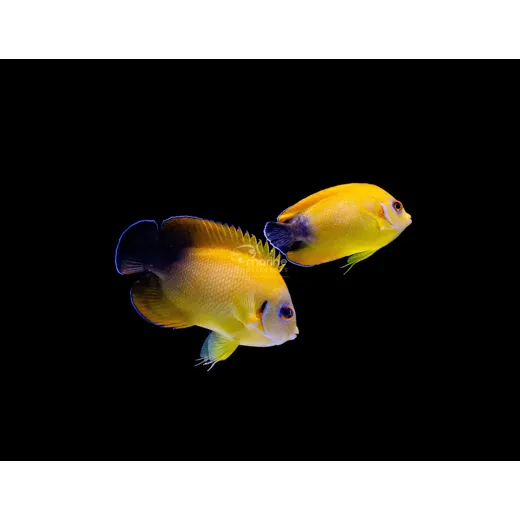
Lemonpeel Hybrid Angel (Centropyge flavissima x C. vroliki)
The Lemonpeel Hybrid Angel is a striking marine fish combining features of Centropyge flavissima and Centropyge vroliki. It reaches a maximum size of 4 inches and is well-suited for experienced aquarists with moderate to intermediate care requirements.
Temperament: Semi-aggressive. Requires careful placement in a reef tank with caution due to potential aggression toward smaller invertebrates.
Water conditions: Optimal temperature range is 72–78°F, pH between 7.8 and 8.5, and salinity of 1.022–1.026.
Diet: Omnivorous, accepting a variety of meaty and plant-based foods.
Origin: Found in the Christmas Islands and Marshall Islands. Belongs to the Pomacanthidae family.
| Minimum Tank Size | 50 gallons |
|---|---|
| Care Level | Moderate/Intermediate |
| Temperament | Semi-Aggressive |
| Reef Compatibility | With Caution |
| Maximum Size | 4 inches |
| Diet | Omnivore |
| Origin | Christmas Islands, Marshall Islands |
| Family | Pomacanthidae |
FAQ
What is the ideal water temperature for Lemonpeel Hybrid Angels?
The ideal water temperature range is 72–78°F.
Can Lemonpeel Hybrid Angels be kept in a reef tank?
Yes, but with caution. Their semi-aggressive nature may pose a threat to smaller invertebrates.
What type of food do they eat?
They are omnivores and accept a variety of meaty and plant-based foods.

Zoe Dowd –
The Lemonpeel Hybrid Angel is a beautiful addition to my 50-gallon tank. It’s active and colorful, though I had to be careful with my corals. Feeds well on a mix of frozen and pellet foods. Good for intermediate reef keepers who want a vibrant fish without too much stress.
Irene Sutherland –
This hybrid angel has a lovely appearance and is more manageable than some other angel species. I keep it in a well-maintained tank with stable water parameters. It’s semi-aggressive, so I placed it away from small polyps. Feeding is straightforward.
Virginia Newman –
The fish looks great and stays active. However, it did nudge a small anemone once, so I now monitor its behavior closely. Water conditions must be stable. Overall, it’s a decent choice for a moderately experienced aquarist.