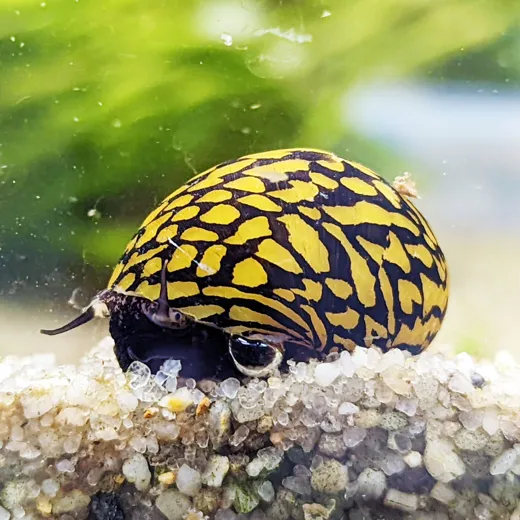
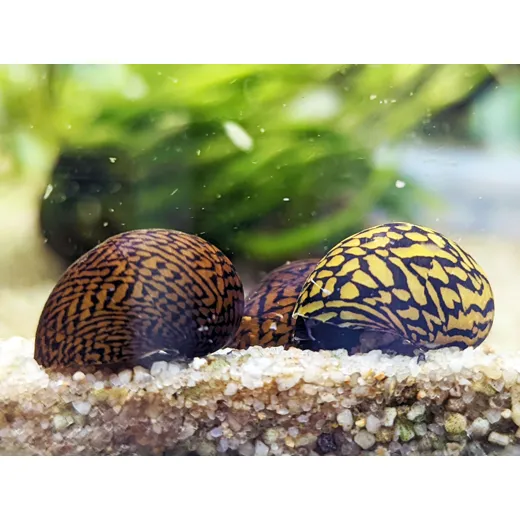
Lightning Bolt Nerite Snail
These Lightning Bolt Nerite Snails (Neritodryas Dubia) are not only beautiful, but they are great algae eaters. They eat algae on aquarium walls, plants, and substrate. These snails are also peaceful creatures and will not bother other tank inhabitants.
Lightning Bolt Nerite Snails are native to the Philippines and are relatively rare in the U.S. market. They are truly gorgeous with their unique zigzag patterns and beautiful gold and black coloration.
We sell our snails at around 3/4 inch in diameter, though they can grow up to 1.2 inch in diameter.
| Specification | Detail |
|---|---|
| Species | Neritodryas Dubia |
| Size (initial) | 3/4 inch |
| Size (mature) | Up to 1.2 inch |
| Origin | Philippines |
| Behavior | Peaceful, algae-eating |
| Breeding | Do not breed in freshwater tanks; brackish water required for egg hatching |
FAQ
Do Lightning Bolt Nerite Snails breed in freshwater tanks?
No, Lightning Bolt Nerite Snails do not breed in freshwater tanks. Brackish water is required for their eggs to hatch, so they will not reproduce in standard aquarium setups.
How big do these snails grow?
They are sold at around 3/4 inch in diameter and can grow up to 1.2 inch in diameter over time.
Are these snails safe for other aquarium inhabitants?
Yes, Lightning Bolt Nerite Snails are peaceful and will not bother other tank inhabitants.


Edward Henderson –
The snails arrived quickly and look exactly as described. Their zigzag patterns are stunning. They’ve been in my tank for two weeks and are actively eating algae on the glass and plants without causing any disturbances. Very happy with the purchase.
Grace Simpson –
I’ve had several snail species before, but these Lightning Bolt Nerite Snails stand out in appearance. They’re calm and don’t interfere with my fish. They’ve been eating algae efficiently and look healthy.
Joanne Langdon –
The snails are beautiful and active. I noticed they’re not breeding, which is a plus. They seem to prefer the back wall of the tank where algae grows. A great addition to a freshwater aquarium.