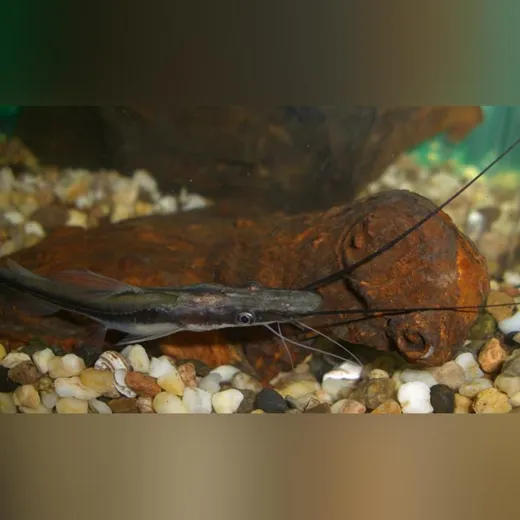
Lima Shovelnose Catfish
The Lima Shovelnose catfish, also called the duckbill catfish, has a unique broad flat shovel mouth and long whiskers. Lima shovelnose are caught in Peru, hence the name – for those that know their capitals. In the aquarium, these fish only grow to about ten inches and can be kept with mid-size and large fish. Generally, the Lima shovelnose catfish will adapt to sinking pellets and frozen food, but be prepared to offer live black worms or feeder ghost shrimp.
Quick Facts
| Scientific Name | Sorubim lima |
|---|---|
| Origin | Amazon and Orinoco basins, South America |
| Care Level | Moderate |
| Temperament | Peaceful (eats small live foods) |
FAQ
What kind of food does the Lima Shovelnose catfish prefer?
The Lima Shovelnose catfish adapts well to sinking pellets and frozen food, but it will also eat live black worms or feeder ghost shrimp.
How big does the Lima Shovelnose catfish grow in an aquarium?
In an aquarium, the Lima Shovelnose catfish typically grows to about ten inches.
Is the Lima Shovelnose catfish compatible with other fish?
Yes, it can be kept with mid-size and large fish, as long as the tank has sufficient space and the other fish are not overly aggressive.

Lucas McDonald –
The Lima Shovelnose catfish is a striking addition to my tank. Its unique shovel-shaped mouth is very eye-catching. I feed it a mix of sinking pellets and occasional live black worms, and it eats readily. It’s peaceful and doesn’t bother other fish, even with larger tank mates.
Cameron North –
I was curious about this species because of its unusual appearance. It’s calm and active during the day. I’ve been feeding it frozen food and a few live worms weekly. It’s adapted well and seems healthy after a few weeks.
Alexandra Turner –
The fish looks impressive in the tank. It’s not aggressive and doesn’t chase smaller fish. I noticed it uses its whiskers to probe the substrate, which is fascinating to watch. Feeding it live food makes it more active and engaged.