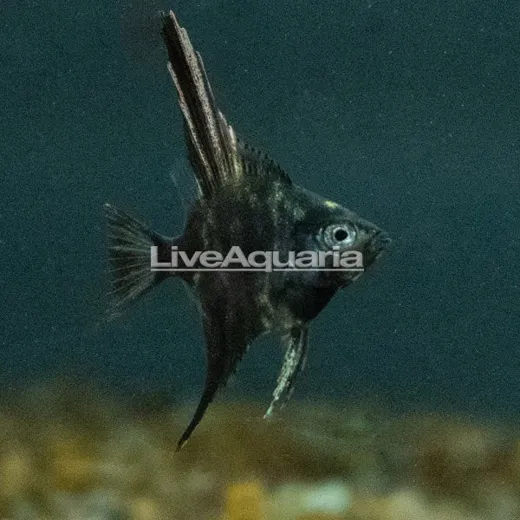
LiveAquaria® Captive-Bred Marble Angelfish
The Marble Angel is captive-bred within the USA and is mostly black in color with areas of varying shades of black and white. The fins are thin and typically will extend the length of the body.
It prefers a well-planted tank of at least 30 gallons with soft, slightly acidic water. Rocks and driftwood can be added to the aquarium, but leave plenty of space for swimming.
For breeding, it is best to house multiple Marble Angels in the same aquarium until they pair off. After a pair forms, a flat surface such as a piece of slate, a large plant leaf, or a flowerpot positioned at a 30-degree angle in moderate water flow is needed. The female will lay the eggs and the male will follow.
| Specifications |
|---|
| Species: Marble Angelfish |
| Breeding Type: Captive-bred |
| Origin: USA |
| Water Type: Soft, slightly acidic |
| Minimum Tank Size: 30 gallons |
| Preferred Habitat: Well-planted, with open swimming space |
FAQ
What is the color pattern of the Marble Angelfish?
The Marble Angel is mostly black with areas of varying shades of black and white.
What tank size and water conditions does it require?
It prefers a well-planted tank of at least 30 gallons with soft, slightly acidic water.
How can I encourage breeding in Marble Angels?
House multiple angels together until they pair off. After pairing, provide a flat surface at a 30-degree angle in moderate water flow, such as a slate, plant leaf, or flowerpot, where the female can lay eggs and the male will follow.
Brandon McDonald –
The Marble Angelfish arrived healthy and active. It has adapted well to our 40-gallon tank with live plants. The coloration is striking with clear black and white marbled patterns. We’ve observed it swimming freely and exploring the tank regularly.
Irene Davies –
We kept one Marble Angel for a few months and it stayed calm and active. The water parameters were stable, and it seemed to enjoy the planted environment. Fins are thin but not fragile, and it doesn’t stress other fish.
Grace Paterson –
Captive-bred quality is evident. The fish is vibrant and shows natural behavior. We added driftwood and plants, and it swims comfortably in open areas. No signs of aggression or stress so far.