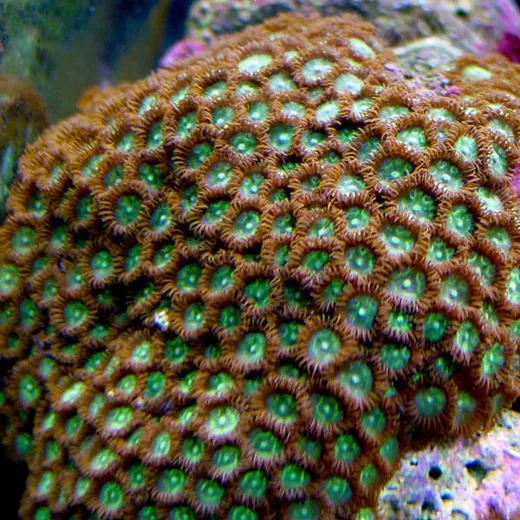
LiveAquaria Zoanthus Colony Polyp Corals
Also known as Sea Mats or Button Polyps, these colonial corals consist of multiple individual polyps attached to a piece of live rock.
They have the ability to sting other polyps or corals, though the sting is mild. These corals are semi-aggressive and require ample space between them and neighboring species to prevent crowding and competition.
Easy to maintain, they are ideal for beginner reef aquarists. They thrive under moderate light and medium water movement. For optimal health, iodine and other trace elements should be regularly added to the aquarium water.
Reproduction occurs through budding, where a portion of the base splits off to form a new colony.
| Key Features |
|---|
| Colonial structure with multiple polyps |
| Requires moderate lighting |
| Needs medium water flow |
| Requires iodine and trace elements |
| Reproduces via budding |
FAQ
Do these polyps harm other corals?
Yes, they can sting other polyps or corals, though the sting is mild. They are semi-aggressive and should be placed with sufficient space from other coral species to avoid competition or damage.
What lighting and water movement do they need?
They require moderate lighting and medium water movement for healthy growth and stability.
How do they reproduce?
They reproduce through budding, where a portion of the base splits off to form a new colony.
Lily North –
Easy to set up and has grown well in my 20-gallon reef tank. I keep it away from other corals and it’s been stable for over six months. I add iodine weekly and it looks vibrant.
Anne Bower –
Grew quickly and stayed healthy with moderate lighting. I gave it space from other polyps and it hasn’t caused any issues. Water parameters are stable and I’ve added trace elements regularly.
Neil Lambert –
Perfect for beginners. The polyps are colorful and active. I noticed they bud after a few months, which is a nice sign of healthy growth. Just make sure to keep them isolated.