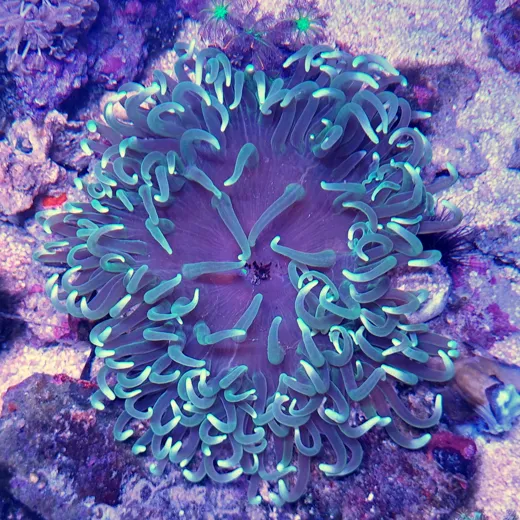
Long Tentacle Doreensis Anemone (Macrodactyla doreensis)
Green
Family: Actiniidae
Care level: Intermediate
Temperament: Semi-aggressive
Reef compatibility: Reef safe with caution
Max size: ~40cm
Diet: Carnivore
Shipping size: Approximately 13cm in diameter
The Long Tentacle Anemone, also known as Corkscrew anemone, naturally hosts Clarkii clownfish and may also host A. ocellaris clownfish occasionally. This species lives on the sandbed, burying its foot in the sand and attaching to the glass or substrate below. It can retract almost completely into the sand when threatened. The vibrant colors, unique texture, and dynamic movement make this anemone a captivating addition to a marine aquarium.
FAQ
Can this anemone coexist with other reef species?
Yes, it is considered reef safe with caution. It may interact with certain fish species, especially clownfish, and should be introduced carefully in a well-established tank.
What kind of diet does the Long Tentacle Doreensis Anemone require?
It is a carnivore and primarily feeds on small crustaceans and other live prey available in the aquarium.
How does the anemone behave when threatened?
It buries itself in the sandbed and retracts almost completely under the sand when it senses danger.
Dylan Nolan –
This anemone is very active and has a beautiful green color with long, flowing tentacles. It has successfully hosted a Clarkii clownfish, which is a great addition to the tank. It stays well hidden in the sand and only extends when it’s safe. The movement is mesmerizing and adds a lot of life to the display.
Joseph Bower –
I’ve had it for three months now and it’s thriving. It’s semi-aggressive, so I keep it away from other anemones. The clownfish has bonded with it and visits regularly. It’s a bit shy at first but settles in well over time.
Paul Gray –
The anemone looks stunning in my tank. It’s not aggressive toward other fish, and the clownfish has found it as a home. I appreciate how it hides in the sand when disturbed. A great choice for intermediate reef keepers.