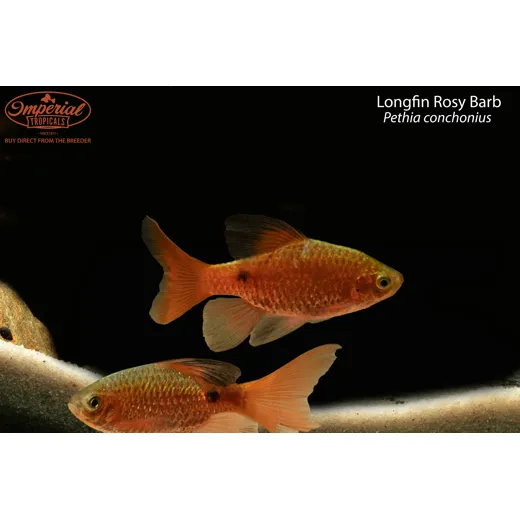
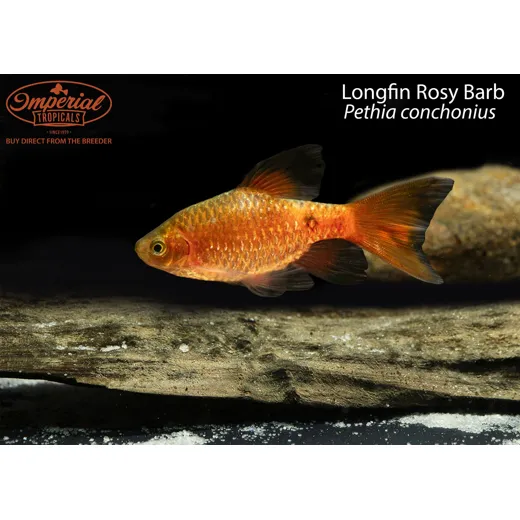
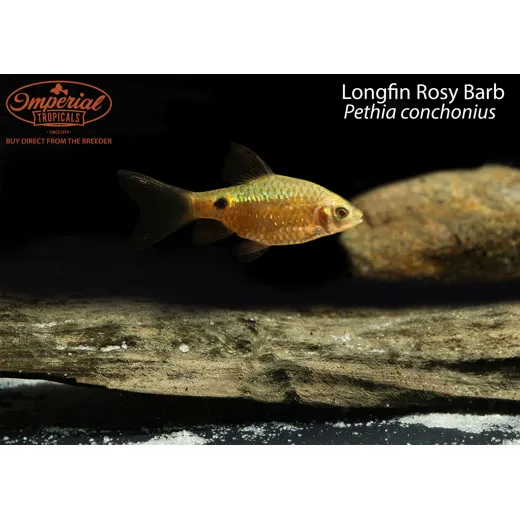
Longfin Rosy Barb
Remarks: Rosy barbs can tolerate a wide range of water parameters and are suitable for most community tank set-ups. Males darken their colors and turn deep red with yellow-green scales in the upper half of the body. Females are a lighter orange color and typically more rounded. They are peaceful barbs and tend to do best with some plant cover. These particular rosy barbs have been selectively bred to produce fish with long, flowing fins. To prevent them from getting damaged, we do not recommend housing longfin rosy barbs with nippy fish such as tiger barbs.
Specifications
| Feature | Detail |
|---|---|
| Species | Longfin Rosy Barb |
| Gender | Males: deep red with yellow-green upper scales; Females: lighter orange, more rounded |
| Temperament | Peaceful, best with plant cover |
| Fin Type | Long, flowing fins |
| Compatibility | Not recommended with nippy species such as tiger barbs |
FAQ
What is the difference between male and female longfin rosy barbs?
Males turn deep red with yellow-green scales on the upper half of the body, while females are lighter orange and typically more rounded in shape.
Are longfin rosy barbs suitable for a community tank?
Yes, they are peaceful and can thrive in most community tank setups, especially when paired with plant cover.
Can longfin rosy barbs be kept with tiger barbs?
No, they are not recommended to be housed with nippy fish such as tiger barbs due to the risk of fin damage.



Jan Gibson –
The longfin rosy barbs are beautiful with their flowing fins. They stay calm and don’t bother other fish. I added some java fern and they seem happy. Only keep them with peaceful species.
Melanie Oliver –
Great color change in males during breeding season. The fish are active but not aggressive. I’ve kept them with neon tetras and they get along well.
Nicola Campbell –
Very satisfied with the quality and appearance. The fins are long and elegant. I made sure to avoid tiger barbs and now have a peaceful tank.