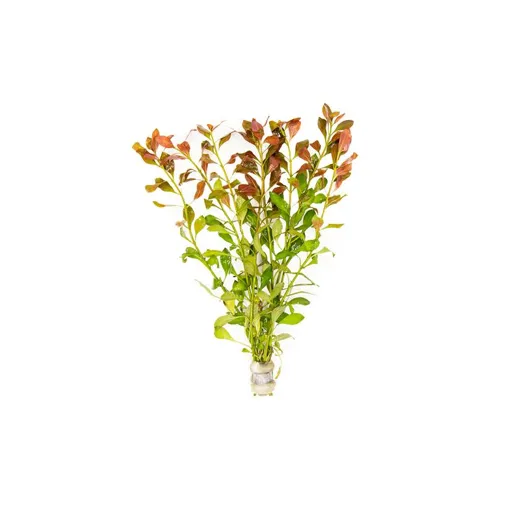
Ludwigia Repens (Ludwigia, Red)
Ludwigia Repens is an easy plant to keep, making it a great option for tank geeks who want to add color to their aquascape without the hassle associated with colorful plants. These plants are ideal for the front zones of the tank. Their vivid color creates a superb focal point. Ludwigia plants have oval leaves that grow in alternating pairs along a tilted stem. The leaves are gold, orange, or red, depending on tank conditions. These plants are very attractive when planted in bunches of 10-12 stems.
Ludwigia is a versatile plant, but to get the desirable bright colors, you must provide high lighting and nutrient levels. High iron content will bring out more red tones in the plant. CO2 injection is not required for the cultivation of this plant, but can help it grow more vigorously.
| Plant Features | Details |
|---|---|
| Leaf Color | Gold, orange, or red |
| Growth Pattern | Oval leaves in alternating pairs along a tilted stem |
| Recommended Placement | Front zone of the tank |
| Lighting Requirement | High lighting for vibrant color |
| Nutrient Requirement | High nutrient levels, especially iron |
| CO2 Requirement | Not required, optional for enhanced growth |
FAQ
What color will the Ludwigia Repens plant turn?
The leaf color of Ludwigia Repens can vary between gold, orange, or red depending on lighting and nutrient conditions, especially iron levels.
Does this plant require CO2 for growth?
CO2 injection is not required for Ludwigia Repens growth, but it can support more vigorous growth.
How should I plant Ludwigia Repens in my aquarium?
Plant Ludwigia Repens in the front zone of the tank in bunches of 10-12 stems for best visual impact.
Elizabeth Avery –
I planted 12 Ludwigia Repens stems in my 20-gallon tank. After two weeks under medium lighting, the leaves turned a vibrant red. The plant grows quickly and adds a striking color to the front of the tank. No CO2 needed, which made setup easy.
Lily Alsop –
The red color is very noticeable in my aquarium. I increased the lighting and added iron-rich fertilizer, and the plants turned a deep orange-red. They grow in clusters and look natural in the front zone.
Paul Gray –
Easy to care for and very colorful. I didn’t need to add CO2 or change water frequently. After a month, the plants were thriving and filled the front area with bright red leaves.