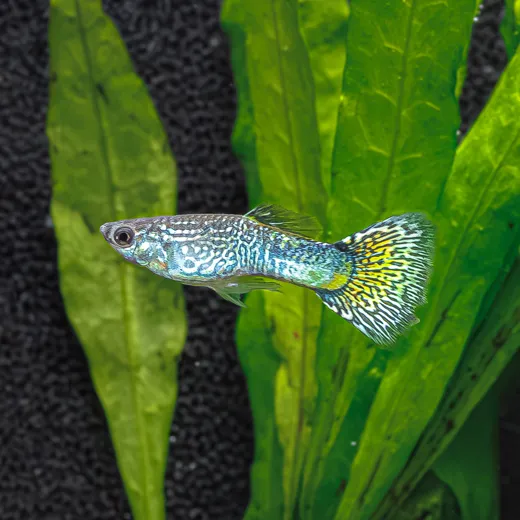
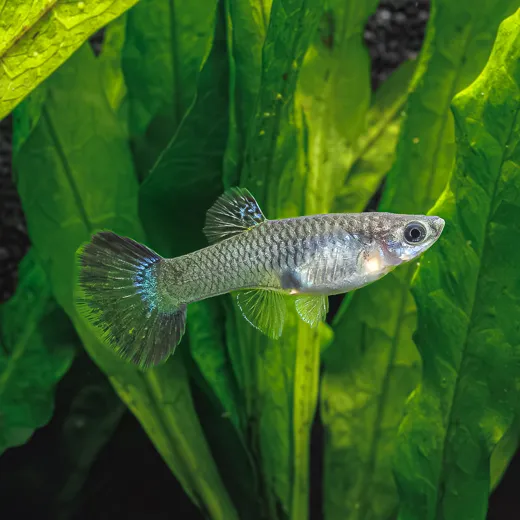
Metal Yellow Lace Guppy
The Metal Yellow Lace Guppy is a stunning fish that brings both visual delight and scientific curiosity to your aquarium. With its shimmering metallic yellow color and intricate lace-like patterns, this guppy showcases the beauty of selective breeding. Each fish is a unique blend of vibrant hues and delicate markings, offering enthusiasts a captivating glimpse into aquatic genetics.
These guppies also play a vital role in freshwater ecosystems, with their graceful movements and engaging behavior providing opportunities for observation and study. Ideal for both beginner and experienced aquarium hobbyists, they add dynamic life to any freshwater setup.
| Species | Poecilia reticulata |
|---|---|
| Color Pattern | Metallic yellow with lace-like markings |
| Size | Up to 2.5 inches (6.4 cm) |
| Lifespan | 3 to 5 years |
| Water Temperature | 72–82°F (22–28°C) |
| Compatibility | Best with peaceful community fish |
FAQ
What makes the Metal Yellow Lace Guppy different from other guppy varieties?
The Metal Yellow Lace Guppy features a unique combination of metallic yellow coloring and intricate lace-like patterns, resulting from selective breeding. This gives it a more vivid and visually striking appearance compared to standard guppy varieties.
How long do these guppies typically live?
Under proper care, Metal Yellow Lace Guppies can live for 3 to 5 years.
Are they suitable for beginners?
Yes, they are well-suited for beginners due to their hardiness and peaceful nature when kept in a properly maintained aquarium.
Sarah McGrath –
The guppies are incredibly vibrant and move gracefully in the tank. The metallic yellow color stands out and adds a lot of visual interest. They are easy to care for and have adapted well to my setup after a few weeks.
Tim Blake –
I bought this guppy for my first aquarium, and it’s been a joy to watch. The lace patterns are very detailed and the fish are active and curious. I’d recommend them to anyone starting with freshwater fish.
Gordon Welch –
The color is exactly as described—shimmering and eye-catching. They seem to get along well with my tetras and dwarf corydoras. I’ve noticed they’re very active during the day and enjoy the surface movement.