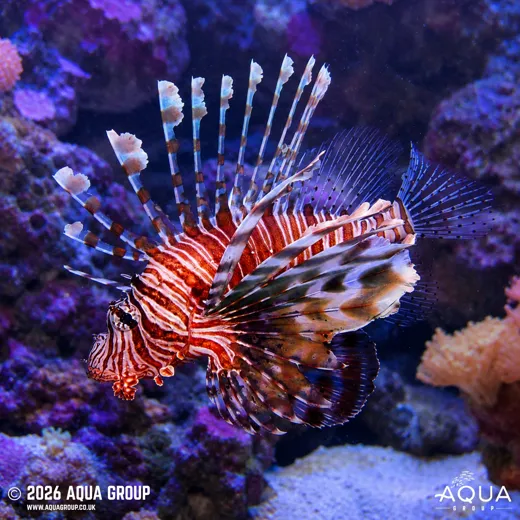
Miles Lionfish (Pterois miles)
The Miles Lionfish (Pterois miles) is a dramatic marine predator recognised by its broad fan-like pectoral fins, elongated venomous spines and contrasting red-brown, cream and white bands. Also known as the Devil Firefish or Indian Lionfish, it originates from the Red Sea and tropical Indian Ocean, where it inhabits coastal reefs, rocky areas and sheltered habitats. Although generally slow-moving and composed, it is an efficient ambush predator that will consume smaller fish and crustaceans, making it best suited to a large, carefully planned predator aquarium.
Common Names:
Miles Lionfish, Devil Firefish, Indian Lionfish, Common Lionfish, Red Sea Lionfish
| Characteristics | Details |
|---|---|
| Origin | Red Sea and tropical Indian Ocean |
| Habitat | Coastal reefs, rocky areas, sheltered habitats |
| Behavior | Slow-moving, ambush predator; feeds on small fish and crustaceans |
| Distinctive Features | Broad pectoral fins, venomous spines, red-brown, cream and white banding |
FAQ
What is the typical habitat of the Miles Lionfish?
The Miles Lionfish is typically found in coastal reefs, rocky areas, and sheltered habitats in the Red Sea and tropical Indian Ocean.
Is the Miles Lionfish aggressive or peaceful?
The Miles Lionfish is generally slow-moving and composed, though it is an ambush predator and may attack smaller fish and crustaceans.
What are the key identifying features of the Miles Lionfish?
It has broad fan-like pectoral fins, elongated venomous spines, and distinct red-brown, cream, and white banding.


Victor Baker –
The Miles Lionfish is a striking addition to my marine tank. Its vibrant coloration and unique fin structure stand out. It remains mostly still, which is ideal for a reef setup. I’ve observed it quietly ambushing small prey, which is both fascinating and natural.
Lauren Arnold –
Beautiful fish with a strong presence. I was initially concerned about its spines, but it’s not aggressive and stays in one area. The color patterns are vivid and it blends well with the reef environment.
Zoe Scott –
A true centerpiece in my aquarium. The red-brown and cream bands are stunning. It doesn’t move much, which makes it easy to observe. I appreciate how it fits into a larger predator tank without causing stress to other species.