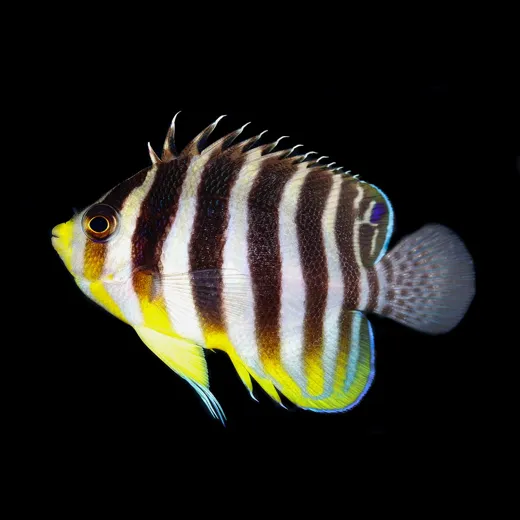
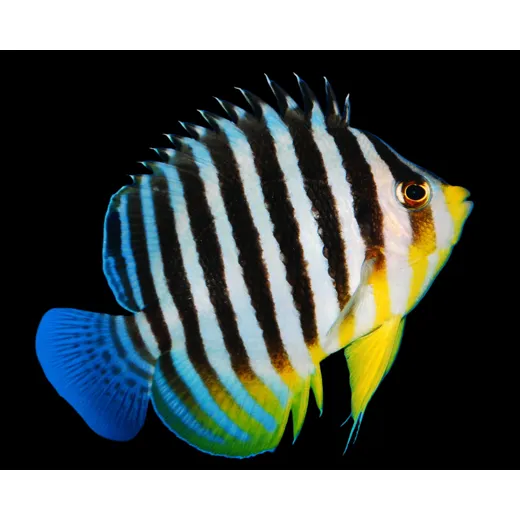
Multibar Angelfish (Paracentropyge multifasciata)
The Multibar Angelfish is a sought after species with mesmerizing contrasting black and white stripes. Wild caught Multibars are rarely offered since they are so difficult to feed and acclimate to captivity; they’re often said to be “best left in the ocean.” We agree. However, these ethically and sustainably captive bred Multibar Angelfish are already well conditioned and eating prepared foods! They’re as hardy as any other angelfish once they are acclimated and eating well.
This is one of the more “reef safe with caution” species of angelfish, and reefers report that captive bred Multibars are even less likely to pick at their coral and sessile inverts.
These exciting dwarf angelfish reach a size of 4.5″ and do best in tanks of at least 55 gallons.
| Specification | Value |
|---|---|
| Scientific Name | Paracentropyge multifasciata |
| Size | 4.5 inches |
| Temperament | Peaceful, reef-safe with caution |
| Feeding | Accepts prepared foods |
| Origin | Captive bred, ethically sourced |
FAQ
Are Multibar Angelfish safe for a reef tank?
Captive bred Multibar Angelfish are considered reef safe with caution. Reefers report they are less likely to damage coral and sessile inverts compared to wild-caught individuals.
How long does it take for a Multibar Angelfish to acclimate to a new tank?
Once introduced to a new tank, Multibar Angelfish typically begin eating prepared foods within a few days. Full acclimation and stable behavior usually occur within one to two weeks.
What type of diet do captive bred Multibar Angelfish require?
They accept a variety of prepared angelfish foods, including flake, pellet, and frozen foods. No special diet is required beyond standard angelfish feeding.
Anne Ball –
Received my Multibar Angelfish a week ago and it’s already active and eating the prepared food. The black and white stripes are stunning. I’m keeping it in a 55-gallon reef tank and haven’t seen any coral damage yet. Very happy with the captive bred quality.
Joseph Parr –
This angelfish is much easier to care for than I expected. It’s well-conditioned and eating flakes right away. The coloration is vibrant and it’s peaceful in the tank. I’m glad I chose the captive bred version over wild-caught.
Charles Blake –
The fish looks beautiful with its striking pattern. It’s been a week and it’s adjusting well. I’m cautious about reef compatibility, but so far no issues. Would recommend for experienced reef keepers.