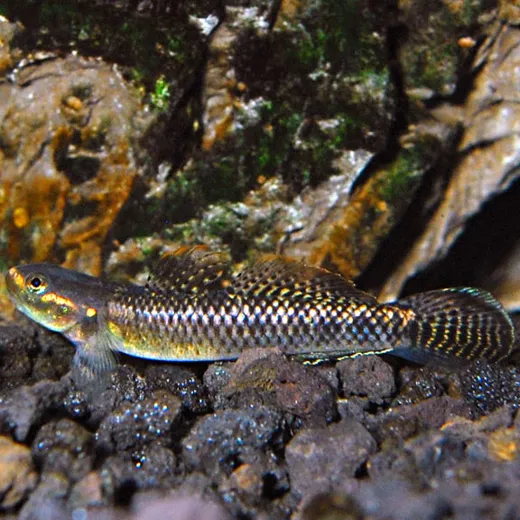
Neon Blue Goby – Freshwater Aquarium Fish
The Neon Blue Goby is a remarkable freshwater fish newly available from the Far East. Known for its striking appearance, this small species is a favorite among aquarium enthusiasts. The male exhibits an iridescent band of blue that runs along its entire body, creating a vibrant and eye-catching look. Initially, new arrivals display pale coloration with subtle iridescence, which deepens over time as the fish acclimates to its environment.
The Neon Blue Goby is an active and energetic fish with a strong appetite for freshwater algae. It plays a beneficial role in maintaining clean tank conditions by grazing on algae surfaces.
| Species | Neon Blue Goby |
|---|---|
| Origin | Far East |
| Size | Up to 2.5 inches |
| Water Type | Freshwater |
| Diet | Algae-based |
FAQ
What is the difference between male and female Neon Blue Gobies?
The male Neon Blue Goby displays a prominent iridescent blue band along its body. Females are less colorful and typically have a more subdued appearance.
How long does it take for a Neon Blue Goby to develop its full coloration?
It typically takes several weeks for a Neon Blue Goby to develop its full, deeper blue coloration after being introduced to a new aquarium environment.
Is the Neon Blue Goby suitable for community tanks?
Yes, the Neon Blue Goby is generally peaceful and well-suited for community tanks with compatible fish species.

Wendy Payne –
The Neon Blue Goby arrived quickly and looks stunning in my 10-gallon tank. The blue coloration is vibrant and has deepened nicely after a few weeks. It’s very active and helps keep the algae under control. A great addition to any freshwater setup.
Joshua Berry –
I was initially skeptical about a small fish with such bright colors, but it’s actually quite charming. It’s not aggressive and blends well with my other fish. The color develops slowly, but it’s worth the wait.
Karen Howard –
This goby has become a highlight in my aquarium. The iridescent blue band is mesmerizing, especially under soft lighting. It’s active and eats algae regularly, which helps maintain tank cleanliness.