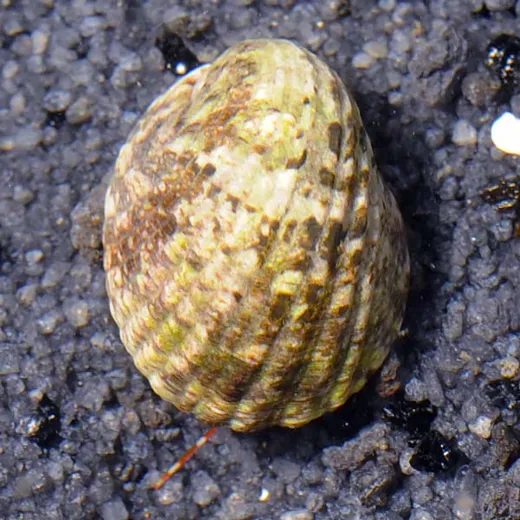
Nerite Snail by LiveAquaria
The Nerite Snail originates from the inner tidal areas of the Pacific and Caribbean Oceans. It features a rounded shell and typically ranges in color from brown to black. This snail remains small in size and is well-suited for reef aquariums due to its gentle nature.
It acts as an effective scavenger, helping to clean algae and organic debris. With its compact size and rounded shell, it rarely knocks over rocks or corals, making it a safe choice for delicate reef environments.
For optimal health, the Nerite Snail requires ample hiding spaces and room to forage. Live rock provides natural food sources such as algae, cyanobacteria, and diatoms. It also grazes on film algae found on aquarium surfaces like the glass and tank walls.
| Key Features | Details |
|---|---|
| Origin | Pacific and Caribbean Oceans |
| Shell Shape | Rounded |
| Color | Brown to black |
| Growth Size | Small |
| Algae Preference | Film algae, cyanobacteria, diatoms |
| Sensitivity | High copper-based medications; high nitrate levels |
FAQ
Can Nerite Snails eat all types of algae in a reef tank?
Nerite Snails primarily consume film algae, cyanobacteria, and diatoms. They are not effective at eating large amounts of attached macroalgae or certain types of green algae.
Are Nerite Snails safe around corals and rocks?
Yes, due to their small size and rounded shell, Nerite Snails rarely knock over rocks or damage corals, making them a safe and gentle addition to reef aquariums.
What should I avoid when keeping Nerite Snails?
Avoid using copper-based medications and maintain low nitrate levels, as Nerite Snails are sensitive to both.
Pippa Parsons –
I’ve had Nerite Snails in my reef tank for six months and they’ve been excellent at cleaning the glass and sides. They don’t damage any of my corals and are very active. Only issue is they don’t eat much of the large algae pads, but they keep the tank looking clean overall.
Paul Harris –
The snails arrived quickly and settled in well. They’re small and don’t cause any disturbances. I noticed they eat film algae regularly, especially on the tank walls. I avoid copper treatments now to keep them healthy.
Brian Mackay –
Great addition to my reef setup. They’re quiet, don’t move around much, and keep the tank clean without any risk of damaging corals. I’ve seen them grazing on live rock and glass daily.