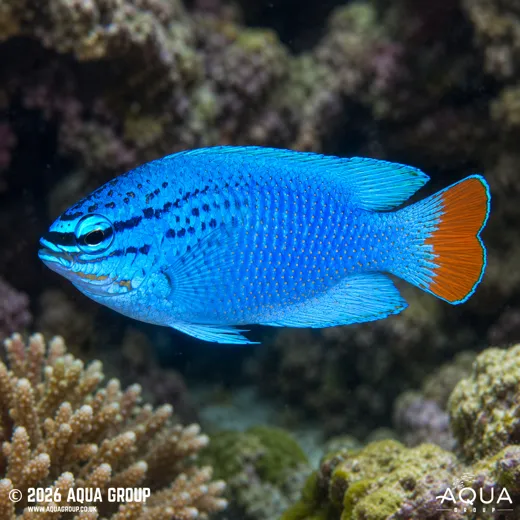
Orange Tail Blue Damsel
An intensely electric-blue damsel, the males finished with a bright orange tail. Extremely hardy, inexpensive and considerably more aggressive than its size suggests.
Feeding
Omnivorous and unfussy. Marine flake, pellets and frozen mysis and brine shrimp.
Compatibility
Reef safe but genuinely territorial and increasingly aggressive with age. Add early in the stocking order, or accept that it will harass later additions.
Behaviour and personality
Bold, fast and constantly defending a territory around rockwork. Males carry the orange tail; females are plain blue.
Before you buy
Very hardy, which is why it is often recommended as a first marine fish, but a mature specimen will bully almost anything added afterwards. Stock it accordingly or change the tank layout to minimize conflict.
| Feature | Detail |
|---|---|
| Color (Male) | Electric blue with bright orange tail |
| Color (Female) | Plain blue |
| Feeding Type | Omnivorous |
| Aggression Level | High, increases with age |
| Reef Safety | Yes |
FAQ
Is the Orange Tail Blue Damsel safe for a reef tank?
Yes, it is reef safe, though it is territorial and becomes increasingly aggressive with age.
What do Orange Tail Blue Damsels eat?
They are omnivorous and accept marine flake, pellets, frozen mysis, and brine shrimp.
Are males and females different in appearance?
Yes, males have a bright orange tail, while females are plain blue.




Tracey Clark –
Easy to care for and very active in the tank. The male with its orange tail stands out. I added it early to avoid conflicts with other fish. It defends its space well around the rockwork. Good for beginners looking for a bold, visible fish.
Keith Wilkins –
It’s hardy and eats well on flake and frozen food. The blue color is striking. After a few months, it started to act aggressively toward smaller fish, so I moved them to a separate area. Still a great addition to a reef setup.
Piers Lyman –
Looks impressive and survives well in my tank. I didn’t expect it to be so territorial. I added it first, and it’s now the dominant fish. I’m okay with that, but I’d recommend caution if you plan to add other species later.