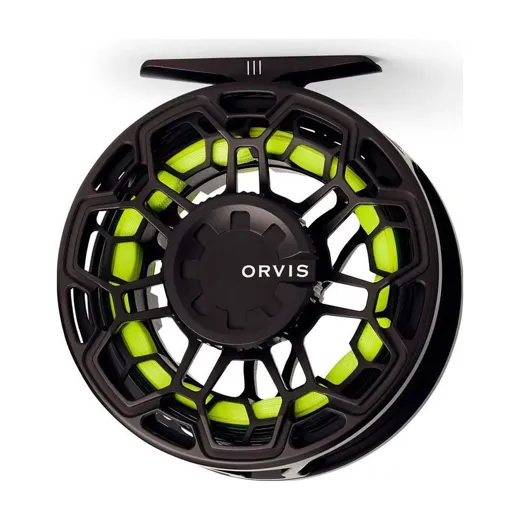
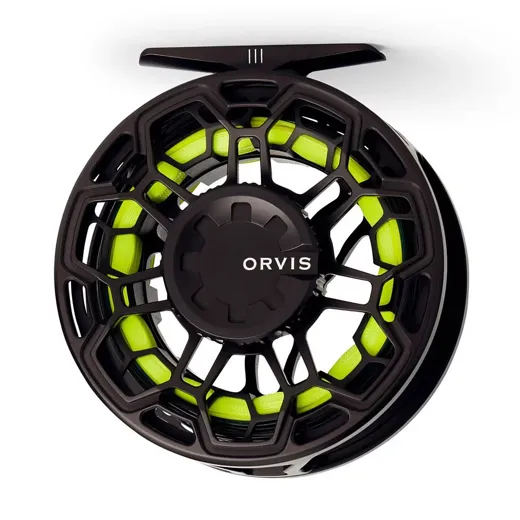
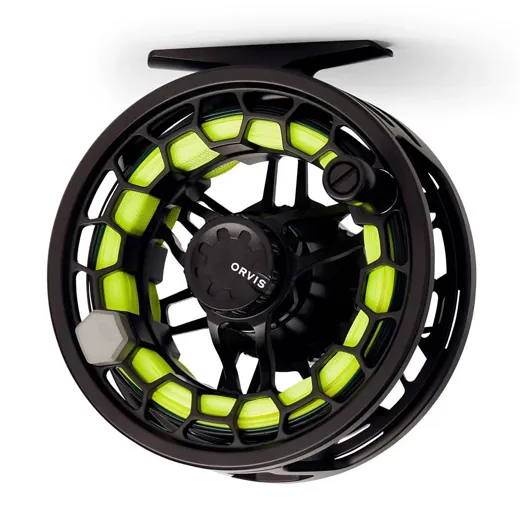
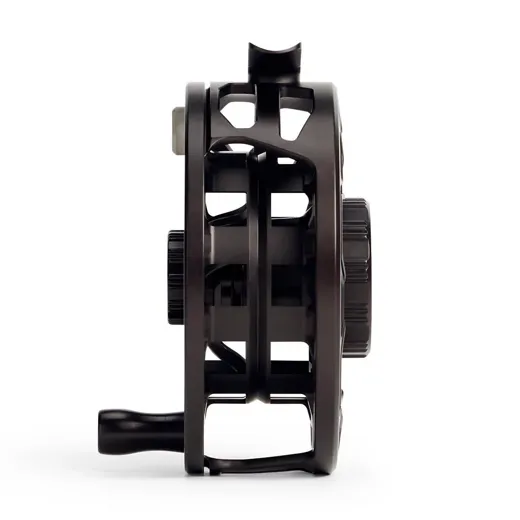
Orvis Ratio Reel – Blackout
Fly line not included
The ultimate reel for tuna, marlin, and shark fishing, when deep-running fish demand extra backing.
The Ratio Reel is your go-to when big fish enter the ring and the winner takes all. The Ratio VI Deep answers the call for tuna, marlin, and shark anglers who need increased backing capacity for deep-running, blue-water fish.
The carbon-stainless drag system uses precision-engineered surfaces to deliver up to 20 lbs. of smooth, consistent pressure with zero startup inertia. In the heat of battle, the oversized indexed drag knob lets you make micro-adjustments without fumbling. Built to withstand brutal saltwater abuse, the Ratio is fully sealed to keep out salt and sand.
Looking for a big-game reel that won’t quit? Here it is.
Weight: 10.1 oz.
| Feature | Specification |
|---|---|
| Reel Type | Spinning |
| Drag Capacity | Up to 20 lbs |
| Sealing | Full saltwater seal |
| Material | Carbon fiber body, stainless steel drag |
| Color | Blackout |
FAQ
What is the drag capacity of the Orvis Ratio Reel?
The Orvis Ratio Reel has a drag capacity of up to 20 lbs.
Is the reel sealed against saltwater exposure?
Yes, the reel is fully sealed to protect against salt and sand.
Does the reel come with a fly line?
No, the fly line is not included.
Simon Hamilton –
Used this reel on a deep-water tuna run and it held up under heavy pressure. The drag system is smooth and responsive. The sealed construction kept it dry even in rough saltwater conditions. A solid choice for big-game fishing.
Steven Anderson –
Felt very reliable during a marlin encounter. The oversized drag knob made it easy to adjust pressure on the fly. No issues with salt ingress after several hours in the ocean.
Abigail Burgess –
Good build quality and strong drag performance. A bit heavy for short trips, but worth it for deep-sea fishing. The blackout finish looks professional and durable.
Rachel White –
Perfect for deep-running species. The carbon-stainless drag system delivers consistent pressure without slipping. I’ve used it in multiple offshore trips with no failures.