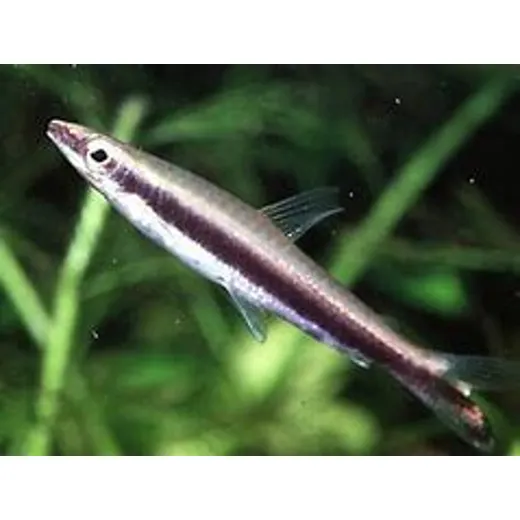
Pencil Fish (Nannostomus unifasciatus)
The Pencil Fish, also known as the one-lined pencil fish, is a small freshwater species native to South America. Adults typically grow to an average length of 4cm, with a maximum of 7cm.
It has a slender body with 17 to 33 scales along the lateral line and features an adipose fin located at the rear of the dorsal area. The fish has a small terminal mouth.
Physical Characteristics
| Feature | Description |
|---|---|
| Body Length | 4cm (average), up to 7cm (maximum) |
| Scales | 17–33 in lateral series |
| Fin Type | Adipose fin (small posterior dorsal fin, no rays) |
| Mouth | Small terminal mouth |
| Stripes | One long black lateral stripe; two silver metallic bands (secondary and tertiary stripes) |
| Tail Fin Color | Variable by geographic population; usually isolated to the lower section |
The primary black stripe runs from the body to the indented caudal fin, with silver bands on either side, giving it a distinctive appearance.
FAQ
What is the typical size of the Pencil Fish?
The average adult size is 4cm, with a maximum of 7cm.
How many scales does the Pencil Fish have?
It has 17 to 33 scales in the lateral series.
What are the key color features of the Pencil Fish?
It has a long black stripe running down the body and onto the tail, with two silver metallic bands on either side. The tail fin color varies by geographic population and is often limited to the lower part.
Steven Sanderson –
The pencil fish is a beautiful addition to my community tank. It’s active and stays in the middle area without being aggressive. The black and silver stripes are very noticeable and it looks great in the water. Easy to care for and adapts well to a small aquarium setup.
Nathan Churchill –
I’ve had this fish for two months now and it’s still active and healthy. The color pattern is striking, especially the black stripe and silver bands. It doesn’t eat much but does respond to small food particles. Good for a beginner aquarist.
Ian Nolan –
The fish is peaceful and fits well with other small community fish. It’s easy to spot due to its unique markings. I appreciate the clear description of its physical traits. It’s a nice choice for a low-maintenance freshwater display.