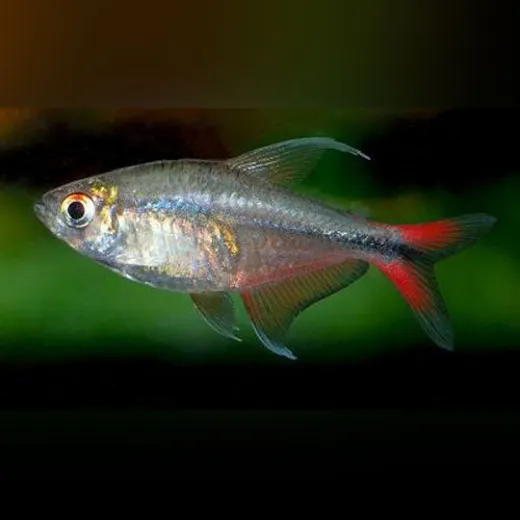
Phoenix Tetra
Rarely found in the trade and pricey, the phoenix tetra sports flowing filaments off its fins and displays bright red tails when attracting mates. These fish are best in schools of six or more, peaceful and hardy. Once wild-caught in Brazil, these are no longer exported. BUT we have one breeder that makes these beautiful fish available to the trade, and when we can get a school of them, we grab ’em. Another name for these tetras is the filamentous tetra.
Quick Facts
| Scientific Name | Hemigrammus filamentosus |
|---|---|
| Origin | Brazil; captive-bred |
| Care Level | Easy |
| Temperament | Peaceful |
| Adult Size | 1.5 inches |
| Water Temperature | 72-78°F |
| Water pH | 6.0-7.0 |
| Water Hardness | 1-8 dGH |
| Compatibility | With other peaceful community fish |
FAQ
What is the ideal school size for phoenix tetras?
Phoenix tetras should be kept in schools of six or more to display their natural behaviors and maintain vibrant coloration.
Are phoenix tetras suitable for beginner aquarium keepers?
Yes, they are considered easy to care for and are peaceful, making them a good choice for beginners with a community tank.
Where do phoenix tetras originate from?
Originally wild-caught in Brazil, they are now only available through captive breeding programs.



Brian Hardacre –
I finally got a school of phoenix tetras after searching for months. The flowing fins and red tail flashes when they’re active are stunning. They’re peaceful and don’t stress other fish. I keep them in a 20-gallon community tank with neon tetras and Corydoras. Very happy with the purchase.
Liam Avery –
The fish arrived healthy and active. I noticed their filaments move beautifully in the water. They do best in groups, so I made sure to buy six. They’re not common, but worth the effort for the visual appeal.
Virginia Short –
After reading many reviews, I decided to go with these tetras. The colors are vibrant and they seem to thrive in a well-maintained tank. I’ve kept them for three months now and they’re still active and healthy.