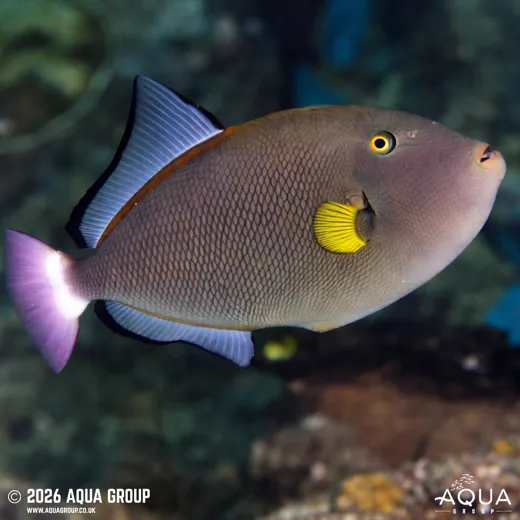
Pinktail Triggerfish
A dark olive triggerfish finished with white-edged dorsal and anal fins and a soft pink tail. One of the better-behaved triggers and genuinely attractive.
Feeding
Omnivorous. Frozen mysis, chopped prawn, clam, krill and dried algae. Takes more vegetable matter than most triggers.
Compatibility
Reef safe with caution – generally leaves corals alone but will eat ornamental shrimp and crabs. Among the more peaceful triggers, though territorial with age.
Behaviour and personality
Cruises steadily in open water. Dark body with white-edged fins and a pale pink tail.
Before you buy
Reaches 35 cm and needs a large tank. More peaceful than most triggers but will still eat invertebrates and become territorial as it matures.
| Size | 35 cm |
|---|---|
| Feeding Type | Omnivorous |
| Reef Safe | With caution |
| Aggression Level | Peaceful (becomes territorial with age) |
FAQ
Is the Pinktail Triggerfish safe for a reef tank?
It is reef safe with caution. It generally avoids corals but may eat ornamental shrimp and crabs.
What does the Pinktail Triggerfish eat?
It is omnivorous and accepts frozen mysis, chopped prawn, clam, krill, and dried algae. It consumes more vegetable matter than most triggerfish.
How big does the Pinktail Triggerfish grow?
It reaches a maximum size of 35 cm and requires a large tank.
Sam Buckland –
The Pinktail Triggerfish is a calm and attractive addition to my reef tank. It doesn’t damage corals and spends most of its time swimming in open water. I feed it a mix of frozen mysis and algae, and it enjoys the vegetable portion. It’s a bit territorial as it gets older, so I make sure to keep it in a spacious tank with plenty of hiding spots.
Isaac Dowd –
This fish is visually striking with its dark body and pink tail. It’s more peaceful than other triggerfish I’ve had. I noticed it occasionally eats small shrimp, so I’ve started adding more hiding places and monitoring invertebrates closely.
Boris Reid –
Great choice for a reef tank if you’re looking for a calm triggerfish. It’s active but not aggressive. Feeding is straightforward with a mix of frozen foods and algae. I’ve kept it in a 120-gallon tank and it’s thriving.