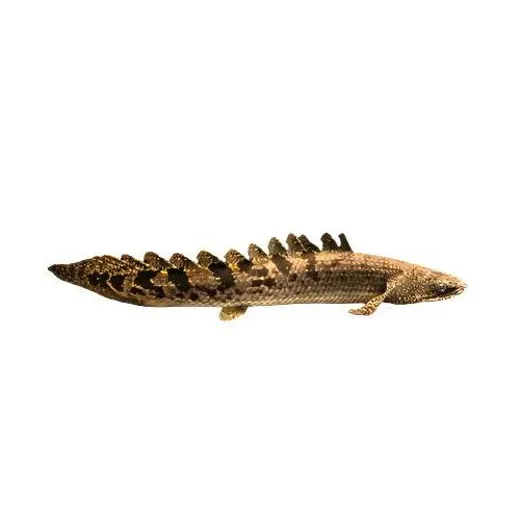
Polypterus Delhezi Armoured Bichir
An incredibly hardy, nocturnal species with very poor vision, The Delhezi Bichir relies on its excellent sense of smell to locate food. This species, along with others of its genus, is one of the last surviving relatives of very ancient species. Fossils of earlier relatives have been found that date back to the Triassic Period, which occurred during the early development of the dinosaurs more than 200 million years ago.
Care
| Category | Detail |
|---|---|
| Care Level | Moderate |
| Temperament | Semi-Aggressive |
| Colour Form | Grey, Black, White |
| Diet | Carnivore |
| Max Size | 30cm |
FAQ
What is the typical diet of the Polypterus Delhezi Armoured Bichir?
The Polypterus Delhezi is a carnivore and relies on its sense of smell to locate food. It feeds on small invertebrates, fish, and other protein-rich prey.
Is the Delhezi Bichir suitable for beginners in aquarium keeping?
While it is considered hardy, the Delhezi Bichir has moderate care requirements and a semi-aggressive temperament, making it more suitable for experienced aquarists.
How does the Delhezi Bichir compare to other bichir species in terms of age and evolution?
The Delhezi Bichir is one of the last surviving relatives of ancient fish species, with fossil records dating back to the Triassic Period over 200 million years ago.


Rose McGrath –
The Delhezi Bichir is surprisingly resilient and adapts well to my tank setup. It’s active at night and shows interest in food even when it’s not visible. The coloration is solid and the fish seems content in a well-maintained aquarium.
Adam Martin –
I’ve kept this bichir for over six months and it’s still healthy. It doesn’t require much attention, though it does need a secure, dark corner for hiding. Feeding it small meaty items works well.
Sophie Carr –
This fish is fascinating to watch. It moves slowly during the day but becomes active at night. The grey and black coloration stands out in the tank. I appreciate its hardiness and low maintenance needs.