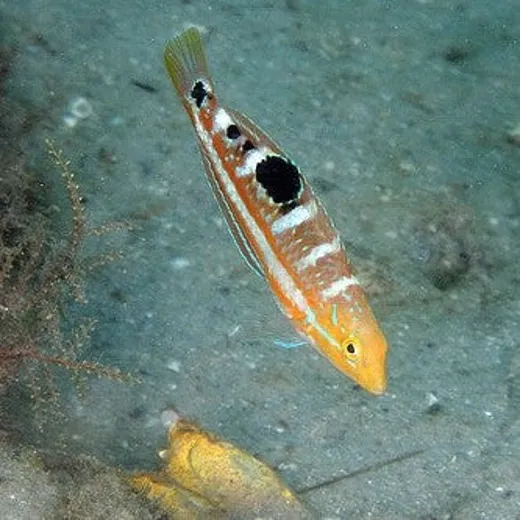
Puddingwife Wrasse (Halichoeres radiatus)
The Puddingwife Wrasse (Halichoeres radiatus) is a large, striking Caribbean wrasse admired for its bold coloration and active personality. Juveniles display a brilliant yellow-orange body with black markings, while adults develop rich shades of green, blue, and bronze accented by vibrant facial markings. Its dramatic color transformation and constant activity make it a standout centerpiece in larger saltwater aquariums.
Native to the coral reefs and rocky habitats of the Caribbean and western Atlantic, the Puddingwife Wrasse spends its days searching for small crustaceans, mollusks, worms, and other meaty prey. This species thrives in aquariums with plenty of live rock for foraging, open swimming areas, and a stable saltwater environment.
| Specs | Scientific Name: Halichoeres radiatus |
|---|---|
| Size | Up to 12 inches (30 cm) |
| Temperature | 75°F – 82°F (24°C – 28°C) |
| Water pH | 8.1 – 8.4 |
| Compatibility | Best with larger, non-aggressive saltwater fish; avoid small, shy species |
| Feeding | Meat-based diet: small crustaceans, mysis, chopped shrimp, and squid |
FAQ
What is the typical color change of a Puddingwife Wrasse as it matures?
Juveniles have a bright yellow-orange body with black markings. As they mature, they develop rich green, blue, and bronze tones with vivid facial patterns.
What kind of habitat does the Puddingwife Wrasse require in an aquarium?
It needs a spacious saltwater tank with live rock for foraging, open swimming areas, and a stable environment with proper water parameters.
Is the Puddingwife Wrasse suitable for beginner saltwater aquarists?
Please contact customer service
Karen Lambert –
The Puddingwife Wrasse is a stunning addition to my reef tank. It changes color beautifully over time and is very active, helping to clean the rock by eating small organisms. I’ve had it for six months and it’s still vibrant and healthy.
Katherine Bell –
Great color shift from yellow to green-blue. It’s not shy and keeps the tank lively. I provide plenty of live rock and a varied diet. Needs a large tank, but worth the space.
Julian Abraham –
The fish has become a focal point in my aquarium. Its movement and color development are impressive. I feed it daily with mysis and shrimp, and it’s always active and curious.