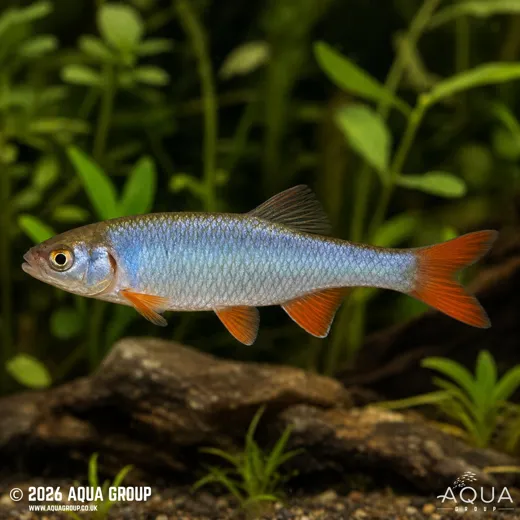
Rainbow Dace
A hardy North American minnow, the males flushing blue and red in breeding condition. Tolerant, active and suited to cooler tanks.
Feeding
Flake, pellets and frozen foods. Entirely unfussy.
Compatibility
Active and boisterous. Keep in groups of six or more with robust coldwater tankmates. Will nip slower, long-finned fish.
Behaviour and personality
Fast and constantly moving. Males display and spar continuously in breeding condition.
Before you buy
A coldwater species that should not be kept permanently warm. Extremely hardy and tolerant, which is exactly why it has become invasive where released – never release into the wild.
| Specification | Value |
|---|---|
| Species | Rainbow Dace |
| Origin | North America |
| Water Temperature | Coldwater (preferably 10–18°C) |
| Group Size | 6 or more |
| Feeding Type | Flake, pellets, frozen foods |
| Aggression Level | Medium to high (nips at long-finned fish) |
FAQ
What is the ideal water temperature for Rainbow Dace?
Rainbow Dace prefer cooler water temperatures between 10–18°C. They are not suited to warm, permanent conditions.
Can Rainbow Dace be kept with other fish?
Yes, they can be kept with robust coldwater tankmates in groups of six or more. However, they may nip at slower, long-finned fish.
Are Rainbow Dace aggressive?
They are active and fast-moving. Males display and spar during breeding season, so they can be somewhat aggressive in that state.


Ruth Wilkins –
Easy to care for and very active. The males turn bright blue and red during breeding season, which is a nice sight. I keep them in a 20-gallon coldwater tank with other coldwater fish. They don’t eat much and adapt quickly to the tank environment.
Trevor Abraham –
Good for a beginner aquarist. They stay healthy even in a cooler tank. I noticed they get more active when the water is slightly cooler. Just make sure not to keep them with long-finned fish like guppies.
Rebecca Turner –
Very hardy and low maintenance. I’ve had them for over a year and they still thrive. The color change in males is striking. I keep them in a group of seven, and they swim constantly, which keeps the tank lively.