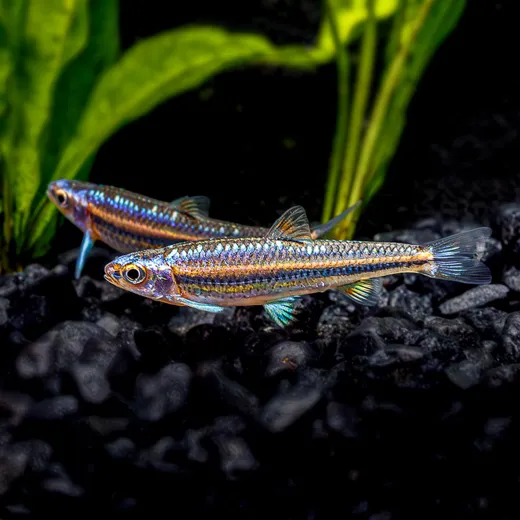
Rainbow Shiner
The Rainbow Shiner is a freshwater fish known for its reflective metallic scales that display subtle shades of pink, blue, and purple. This species is native to the cool, clear streams of the southeastern United States and is known for its peaceful nature, making it an excellent addition to community aquariums. Rainbow shiners prefer clean, well-oxygenated water and thrive in aquariums with plenty of swimming space, as well as shaded areas created by plants, rocks, or driftwood. Their schooling behavior means they are most comfortable and visually striking when kept in groups of six or more.
Rainbow Shiners are easy to care for and enjoy a varied diet that includes high-quality flakes, frozen foods, and live foods. Regular feeding with a balanced diet helps maintain their health and vibrant appearance.
| Specifications |
|---|
| Species: Notropis chrosomus |
| Water Temperature: 18–24°C |
| Water pH: 6.0–7.5 |
| Water Hardness: Soft to moderately hard |
| Group Size: 6 or more |
| Feeding: Flakes, frozen, live foods |
FAQ
What is the ideal group size for Rainbow Shiners?
Rainbow Shiners are most comfortable and visually striking when kept in groups of six or more.
What type of water conditions do Rainbow Shiners prefer?
They prefer clean, well-oxygenated water with a temperature range of 18–24°C, pH between 6.0 and 7.5, and soft to moderately hard water.
What do Rainbow Shiners eat?
They enjoy a varied diet including high-quality flakes, frozen foods, and live foods. A balanced diet supports their health and coloration.

Fiona Knox –
I added six Rainbow Shiners to my 55-gallon tank. They settled in quickly and swim together in a peaceful school. The colors are vibrant and show off well under soft lighting. I feed them flakes and a bit of frozen brine shrimp each day. Water parameters stayed stable with regular water changes.
Julia Ball –
The fish are calm and don’t stress other species in the tank. I kept them with tetras and corydoras. They like the shaded areas near plants. Feeding them a mix of flakes and frozen food keeps them active and colorful.
Jan Johnston –
After a month, the rainbow effect on their scales is very noticeable. They thrive in a well-planted tank with driftwood and hiding spots. Easy to maintain and don’t require special care beyond regular feeding.