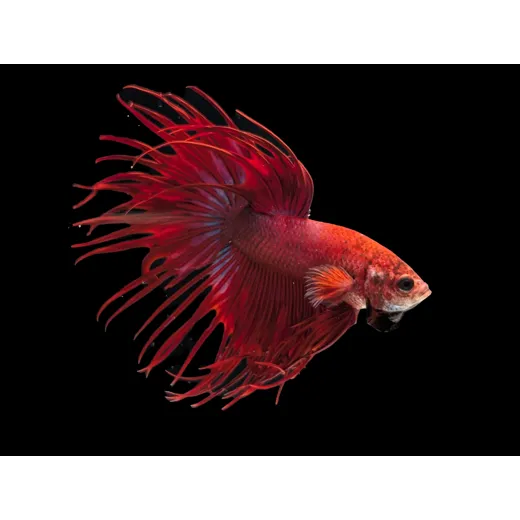
Red Crowntail Betta
This will be a random selection, but most of these bettas look very similar to the photo.
Male bettas are highly territorial and will fiercely defend their space. They are known for their aggressive displays towards other bettas, which include flaring their gills, spreading their fins, and charging. Male bettas build bubble nests at the water’s surface to house their eggs and fry.
Each betta has its own distinct personality. Some are curious and interactive, while others are more shy and reclusive. Bettas prefer warm, clean water with a temperature range of 78-80°F (25-27°C). While they can survive in small containers, a minimum of 5 gallons is recommended for optimal health and well-being. Larger tanks provide more space for swimming and exploration.
| Specification | Value |
|---|---|
| Species | Male Betta |
| Temperature Range | 78-80°F (25-27°C) |
| Minimum Tank Size | 5 gallons |
| Behavior | Aggressive, territorial, builds bubble nests |
FAQ
What is the typical behavior of a Red Crowntail Betta?
Male bettas are highly territorial and will display aggression toward other bettas, including flaring gills, spreading fins, and charging. They also build bubble nests to protect their eggs and fry.
What water conditions do Red Crowntail Bettas prefer?
Bettas prefer warm, clean water with a temperature range of 78-80°F (25-27°C).
What is the minimum tank size recommended for a Red Crowntail Betta?
A minimum of 5 gallons is recommended for optimal health and well-being.
Theresa Bell –
The betta arrived quickly and looks exactly like the photo. It’s active and curious, often swimming near the surface. I’ve kept it in a 5-gallon tank with a heater, and it’s adjusting well. The bubble nest behavior is fascinating to watch.
Una Simpson –
It’s a beautiful fish with a striking red crown tail. It’s a bit shy at first but has become more interactive over time. I keep it in a 5-gallon tank with a heater and regular water changes. It’s a good beginner pet.
Alison Thomson –
The fish is vibrant and active. It builds a bubble nest regularly, which is a sign of good health. I’ve noticed it flares its gills when near the edge of the tank. The water temperature stays stable with the heater I use.