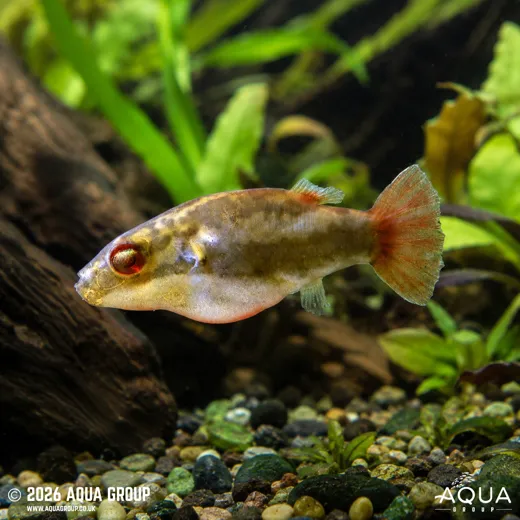
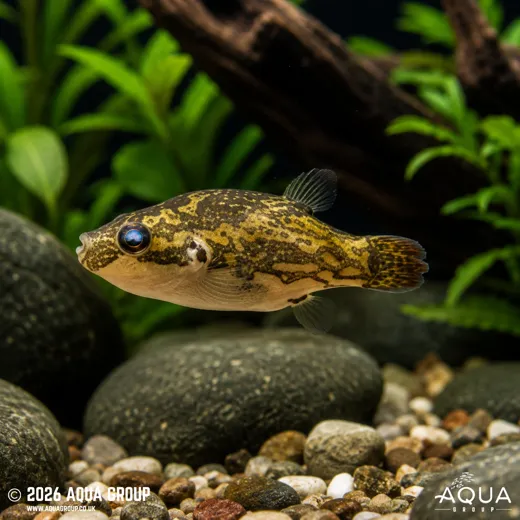
Red-tailed Red-eye Puffer (Carinotetraodon irrubesco)
The Red-tailed Red-eye Puffer, Carinotetraodon irrubesco, is a small true freshwater puffer with bright red eyes, a compact body and attractive red to orange tail colour in mature males. Also known as the Red-eye Red-tail Puffer, Irrubesco Puffer or Red-tail Dwarf Puffer, this Indonesian species is full of personality but should be treated as a specialist fish rather than a general community choice. It is best suited to a mature, well-planted aquarium with soft cover, careful feeding and tank mates chosen with extreme caution.
Common Names
- Red-tailed Red-eye Puffer
- Red-eye Red-tail Puffer
- Irrubesco Puffer
- Red-tail Dwarf Puffer
- Red-eye Puffer
Species Information
| Scientific Name | Carinotetraodon irrubesco |
|---|---|
| Origin | Indonesia |
| Size | Up to 4 cm (1.5 inches) in length |
| Water Temperature | 22–26°C (72–79°F) |
| Water pH | 6.0–7.0 |
| Hardness | Soft water (dGH 3–5) |
FAQ
What are the ideal water conditions for this puffer?
The Red-tailed Red-eye Puffer prefers soft water with a pH between 6.0 and 7.0 and water temperature between 22–26°C (72–79°F). It thrives in well-planted tanks with soft cover.
Can this puffer be kept with other fish?
Only with very cautious selection of tank mates. It is aggressive and may harm smaller or slower-moving fish. Best kept in a mature, well-planted aquarium with compatible species.
How long does it take for a male to develop its red tail?
Mature males typically develop their red to orange tail colour after reaching sexual maturity, which can take several months in a stable environment.
Dorothy Peters –
This puffer is a striking addition to a planted tank. The red eyes and tail make it stand out. I’ve had it for six months and it’s active but not overly aggressive. Needs a well-maintained environment and careful feeding. Works well with peaceful shrimp and small tetras.
David Roberts –
Beautiful fish with vibrant colours. I was cautious about keeping it due to its size and temperament. After setting up a soft, planted tank with stable water parameters, it has adapted well. Feeding it small portions of frozen brine shrimp helps maintain its health.
Bella Abraham –
The fish looks impressive, but it’s not suitable for beginners. I noticed it becomes stressed when other fish are too active. I keep it alone now with a few floating plants. It’s a good choice for experienced aquarists with a mature setup.