Red Tiger Motaguensis Cichlid (Parachromis motaguensis)
The fire-patterned hunter of Central America
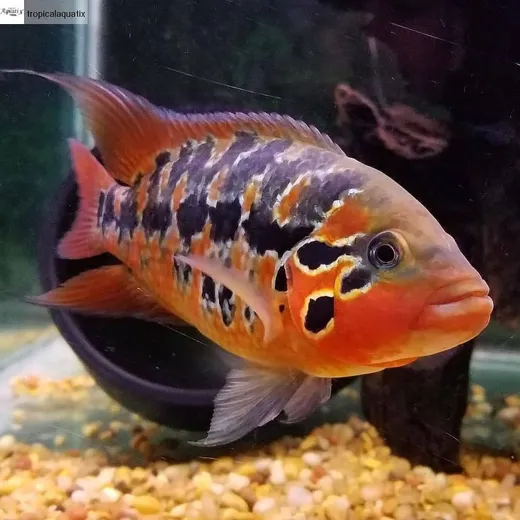
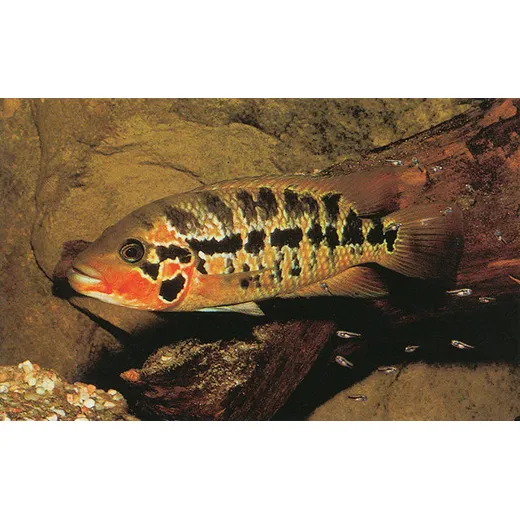
The Red Tiger Motaguensis is a true predator cichlid — power, pattern, and attitude in one fish. Native to the rivers of Honduras and Guatemala, this species is built long and muscular with a large jaw designed for ambush feeding. What makes this variant special is its coloration: bold black barring layered over intense red and orange tones that deepen with maturity, creating a tiger-like pattern that looks alive even when the fish is still.
Growing into the 14–18+ inch range, the Motaguensis carries the behavior of a top river predator. It is alert, aware, and constantly observing its surroundings, quickly recognizing feeding patterns and responding with precision.
| Specifications |
|---|
| Scientific Name: Parachromis motaguensis |
| Origin: Rivers of Honduras and Guatemala |
| Size: 14–18+ inches |
| Behavior: Ambush predator, highly alert |
| Coloration: Black barring with red and orange tones (deepens with age) |
FAQ
What is the typical size of a Red Tiger Motaguensis cichlid?
The Red Tiger Motaguensis typically grows to a size of 14–18+ inches.
Where is the Red Tiger Motaguensis originally from?
This species is native to the rivers of Honduras and Guatemala in Central America.
How does the coloration of the Red Tiger Motaguensis change over time?
The coloration features bold black barring layered over intense red and orange tones, which deepen and become more vivid as the fish matures.

Dorothy Grant –
This fish is a striking addition to any freshwater tank. The red and black pattern is vivid and changes subtly with light. It’s very active and always watching the surroundings. Needs a large tank and strong hiding spots, but worth the effort.
Trevor Stewart –
The coloration is impressive, especially when the light hits it at certain angles. It’s not a peaceful fish — it’s more of a predator. I have a large tank with plenty of cover, and it’s been very active since arrival.
Karen Slater –
I’ve kept this fish for over six months and it’s still vibrant. The black and red pattern looks alive even when it’s not moving. It’s a true centerpiece in the tank.