
Riccia fluitans
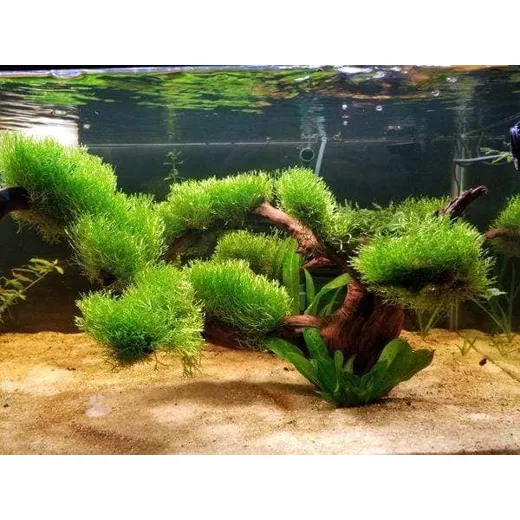
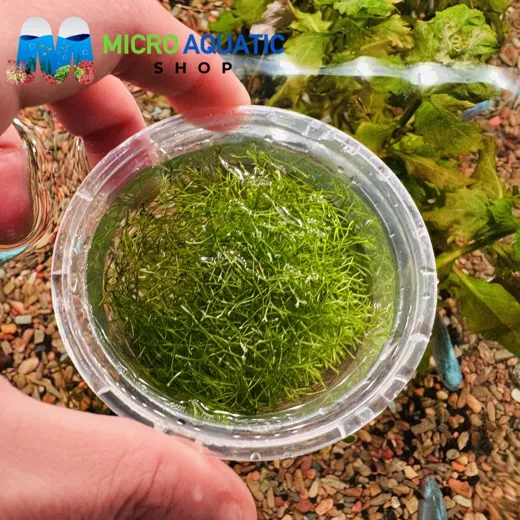
Riccia fluitans, also known as crystalwort, is a floating plant found worldwide. It was first scientifically described by Linnaeus in 1753. Takashi Amano from Japan was the first to cultivate it submerged in his natural aquariums, using it as an epiphyte by attaching it to wood and rocks with thin fishing line. Since then, Riccia has become a favorite among aquarists. Four varieties exist—originating from Japan, Europe, Thailand, and Singapore—though only the Japanese variety is suitable for submerged cultivation.
Riccia fluitans is easy to grow and thrives in a variety of conditions. Its wide global distribution is due to its tolerance to fluctuating environments.
| Characteristics | Details |
|---|---|
| Origin | Japan (suitable for submerged use) |
| Growth Type | Floating, epiphytic |
| Light Requirement | Low to moderate |
| Water Temperature | 18–26°C |
| Hardiness | High; tolerates fluctuating conditions |
FAQ
Is Riccia fluitans suitable for submerged aquariums?
Yes, only the Japanese variety of Riccia fluitans is suitable for submerged cultivation.
Can Riccia fluitans be grown in low-light conditions?
Yes, it thrives in low to moderate light conditions.
What are the ideal water temperature ranges for Riccia fluitans?
The ideal water temperature range is 18–26°C.

Liam Rutherford –
I’ve been growing Riccia fluitans in my freshwater tank for three months. It floats beautifully and stays healthy even in low light. The Japanese variety works perfectly submerged. Easy to maintain and adds a nice natural look to the aquarium.
Amanda Grant –
The plant spreads well and stays vibrant. I attached it to a driftwood piece and it has grown steadily. It’s not flashy, but it’s reliable and adds a subtle elegance to the tank.
Maria Lambert –
Great for beginners. I didn’t expect it to be so hardy. It survived a temperature drop and still looks fresh. I’m happy with the choice of the Japanese variety.