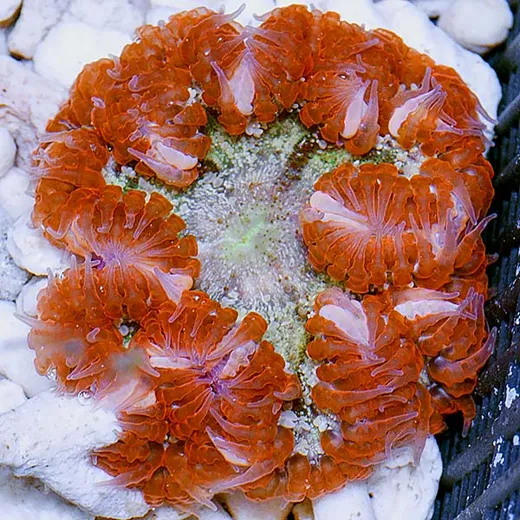
Rock Flower Anemone, Ultra
The Rock Flower Anemone, also known as the Rock Anemone, is a member of the Phymanthidae family. Originating from the Caribbean, these anemones are found in a wide array of colors, with the oral disc often being a different color than the rest of the anemone. The oral disc lacks tentacles, and the tentacles are often beaded in appearance.
The Flower Anemone can live singly or in groups. They prefer to live on shaded, vertical rock walls, or within the substrate. They will bury most of their body in the sand, with only the oral disc and tentacles showing. These are fairly hardy anemones that will adapt to a wide variety of lighting conditions. These anemones tend not to wander about the aquarium and are a great addition to a reef aquarium.
Specifications
| Feature | Detail |
|---|---|
| Family | Phymanthidae |
| Origin | Caribbean |
| Lighting Preference | Shaded to moderate |
| Substrate Preference | Vertical rock walls or sand |
| Behavior | Stays in place, buries body in sand |
FAQ
What are the ideal lighting conditions for the Rock Flower Anemone?
The Rock Flower Anemone adapts well to a range of lighting conditions, from shaded to moderate lighting. It prefers shaded areas and does not require intense illumination.
Where does the Rock Flower Anemone typically live in an aquarium?
It commonly lives on shaded, vertical rock walls or within the substrate. It often buries most of its body in sand, with only the oral disc and tentacles exposed.
Are Rock Flower Anemones active or stationary in the tank?
These anemones tend to stay in one place and do not wander. They are stationary and are a stable addition to reef tanks.
Ryan Cameron –
Easy to keep and very colorful. I placed it on a shaded rock wall and it settled right in. The oral disc stands out nicely against the sand. It hasn’t moved at all after two months.
Victor Stewart –
Grew well in moderate lighting. It hides most of its body in the sand, which looks natural. Only one other anemone joined it, and they stayed together nicely.
Evan McGrath –
Perfect for a reef setup. It’s hardy and doesn’t require much attention. The beaded tentacles are unique and add visual interest to the tank.