Overview
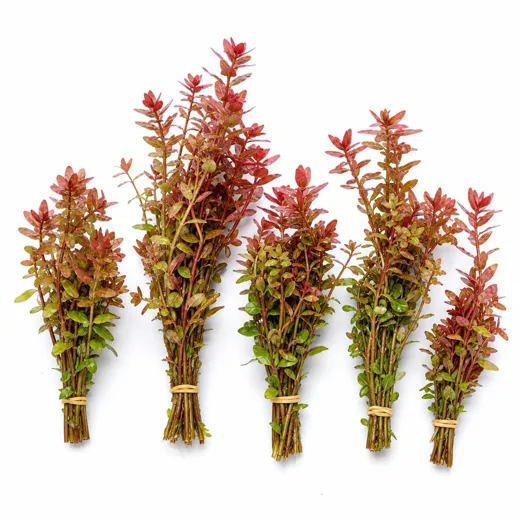
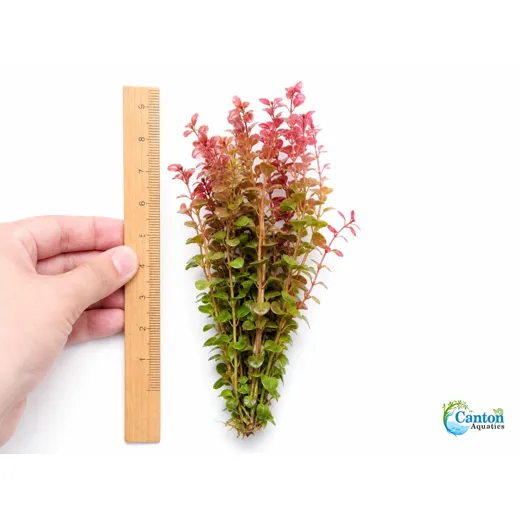
Rotala indica ‘Red’ is a popular and beginner-friendly freshwater stem plant prized for its adaptable growth and striking red-to-orange coloration. This plant undergoes a noticeable transformation from its emersed form to submerged growth, shifting from rounded leaves to narrow, pointed foliage that creates a dynamic and natural look in aquascapes.
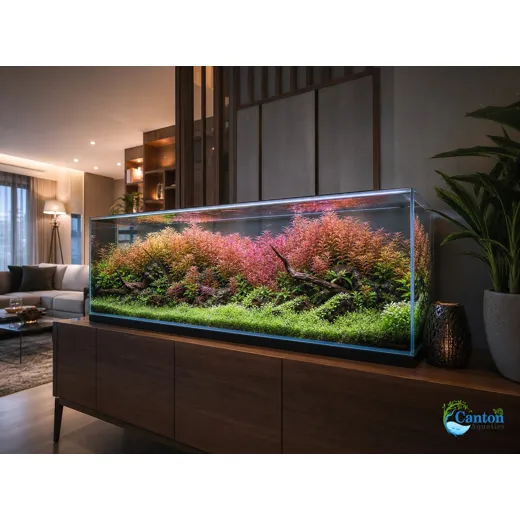
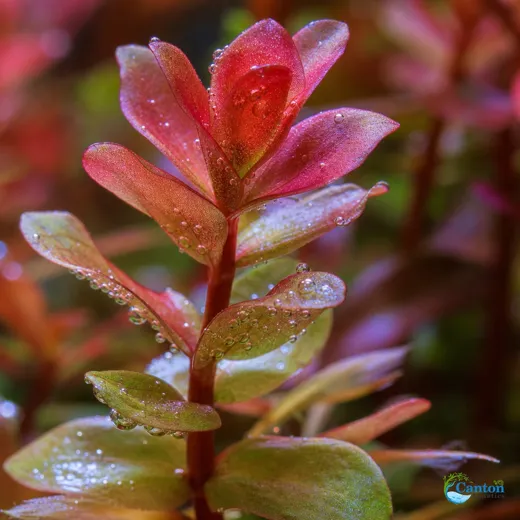
Under stronger lighting, Rotala indica ‘Red’ develops deeper pink, orange, and wine-red tones, making it an excellent choice for accent planting or dense background groupings.
Key Features
-
Color-changing foliage based on light and nutrients
-
Fast-growing stem plant
-
Transitions beautifully from emersed to submerged form
-
Produces bushy growth that fills space efficiently
| Specification | Detail |
|---|---|
| Growth Type | Stem plant |
| Light Requirement | Medium to high |
| Water Temperature | 18°C to 28°C |
| Hardiness | Beginner to intermediate |
FAQ
What is the color variation of Rotala indica ‘Red’ under different lighting conditions?
Under stronger lighting, Rotala indica ‘Red’ develops deeper pink, orange, and wine-red tones, enhancing its visual impact in the aquarium.
Does Rotala indica ‘Red’ require special substrate or planting method?
No special substrate is required. It grows well in standard aquarium substrates and can be planted directly in the water column or attached to driftwood or rocks.
How long does it take for Rotala indica ‘Red’ to establish in a tank?
Rotala indica ‘Red’ typically establishes within 2 to 4 weeks, showing visible growth and color development with proper lighting and nutrient availability.

Deirdre Springer –
I’ve been growing Rotala indica ‘Red’ for three months now. The color shift from green to deep red under bright lights is amazing. It fills the back of my tank beautifully and grows quickly without needing much maintenance.
Rebecca Campbell –
It’s easy to care for and works well in a mixed planted setup. The plant changes color depending on light intensity, which adds visual interest over time. Just make sure to provide good lighting for the best results.
Harry Parr –
I started with a small group and now it’s covering a large section of my tank. The transition from emersed to submerged form is smooth and natural. I love how it looks in the evening light with soft shadows.